

Why Red Acne Marks and Pitted Scars Require Different Treatments (Acne Scars Part 3) Beomgye, Pyeongchon, Beomgye Station, Pyeongchon Station, Hogye-dong, Bisan-dong, Gwanyang-dong, Dongan-gu, Indeogwon, Geumjeong, Anyang
This is Gyeonggi Anyang Beomgye KKEUT Korean Clinic's procedure note on Why Red Acne Marks and Pitted Scars Require Different Treatments (Acne Scars Part 3).
Often referred to as acne marks, the actual appearance left on the skin is categorized into three forms.
Broadly, they can be classified into red marks, brown hyperpigmentation, and indented scars where the skin surface sinks.
In the previous content, we explained pre-treatment considerations and Juvlook procedures. In this article, we will focus on how to identify the types of acne marks.
This is because the necessary therapeutic approach can vary depending on each type.
We provide detailed information, from symptoms to necessary procedures and the appropriate order of progression.
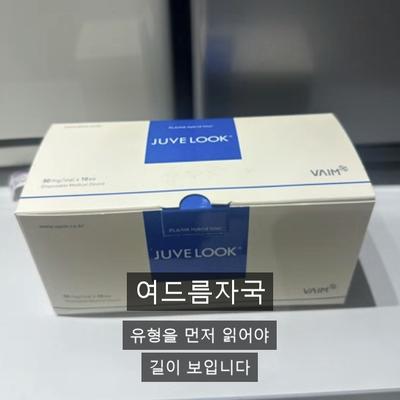
Red marks and brown marks are changes that appear on the skin surface
Even after acne inflammation subsides, redness often persists in the affected area.
This condition, where capillaries expanded due to inflammatory reactions show through the skin, is referred to as a red mark.
Brown marks signify a state where excessive pigment is produced and deposited in the skin after inflammation occurs.
Both of these types have a relatively flat skin surface, and no significant unevenness is felt when touched with a hand.
Since these marks are primarily pigment issues rather than skin deformation, an approach aimed at alleviating hyperpigmentation is considered first.
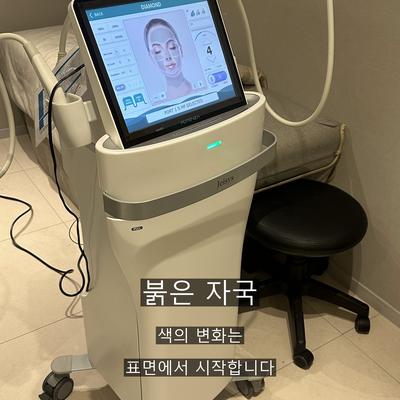
Indented marks involve changes in the deep structure of the skin
When inflammation penetrates deep into the skin, the dermis layer's collagen may not regenerate sufficiently during the healing process.
As a result, the skin in that area sinks inward, creating unevenness on the surface, which can be described as an indented mark.
When light is shined from the side, a shadow is observed, and unevenness on the skin surface can be felt when touched with fingertips.
Since these types are not merely pigment issues but structural changes in the skin tissue, treatments that only address pigment may have limitations.
Therefore, an approach that replenishes collagen in the dermis layer is required.
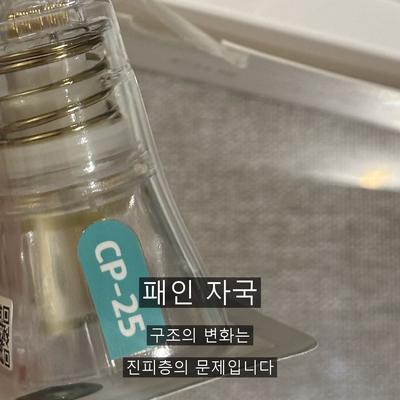
Three ways to identify your type of acne marks
First, check if the redness temporarily fades when you gently press and then release the marked area.
If the color fades when pressed, it's likely a mark where redness predominantly remains.
Second, observe if a shadow is formed when light is shined on the mark from the side.
Third, gently run your fingertips over the area to check if you feel any unevenness on the skin surface.
Since multiple types of marks often appear together on one face, it's necessary to identify them separately by area.
If you find it difficult to distinguish the types yourself, consulting with a medical professional for an accurate diagnosis by area can be helpful.
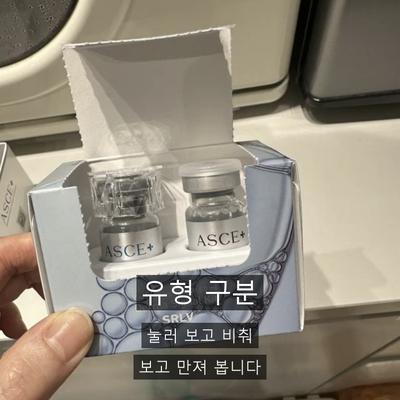
If multiple types are mixed, the order of procedures is important
It is also common to see redness appearing simultaneously on top of indented marks.
In such cases, it is necessary to plan procedures that improve skin structure separately from those that alleviate redness.
Immediately after the procedure, temporary redness or minor bleeding points may appear. These usually subside within 1-2 days, but can persist for up to a week depending on the treatment intensity and individual skin characteristics.
Therefore, the redness occurring after the procedure and the original redness of the marks should be understood differently.
For about 1-2 days after the procedure, it is advisable to avoid saunas, strenuous exercise, and alcohol consumption. Please pay attention to moisturizing and UV protection during this period.
Indented marks require a direct approach to the dermis layer
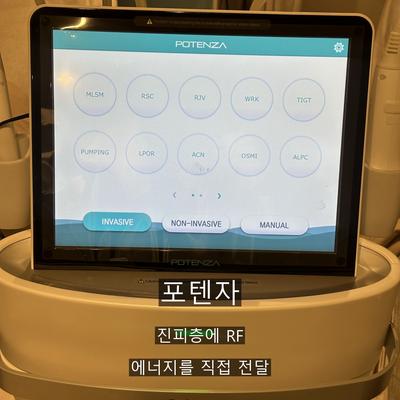
Potenza is a procedure that uses micro-needles to create channels in the dermis layer, then emits radiofrequency energy from the needle tips to induce the production of collagen and elastin.
It can be applied to improve acne scars, depressed scars, and enlarged pores.
Considering the characteristics of the treatment area, the needle depth is finely adjusted from 0.5mm to 3.5mm.
As anesthesia is administered before the procedure, the burden of pain can be relatively low.
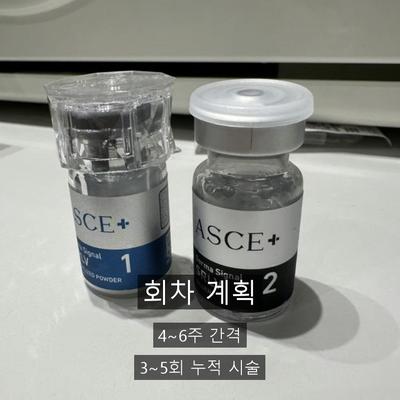
Procedures are generally performed at 4-6 week intervals, and 3-5 sessions may be considered for satisfactory improvement.
Skin texture improvement can be expected even with a single session, but for deep scars, gradual regeneration can be achieved through multiple sessions.
Juvlook can be considered when collagen production is needed
Juvlook is a procedure that helps promote collagen production for overall skin concerns such as pores, fine wrinkles, and acne scars.
At our Kkeut Korean Medicine Clinic, we apply a different method instead of injection for Juvlook procedures.
Considering the risk of nodule formation with injection procedures and the potential for poor drug absorption into the dermal layer, we choose a non-injection method.
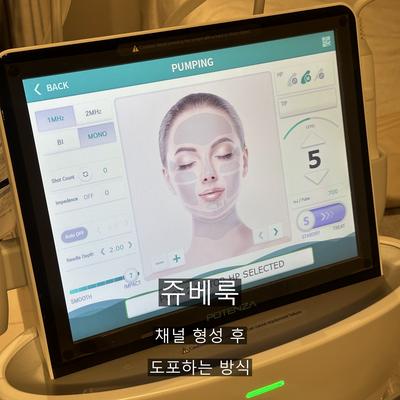
This method utilizes a pumping tip or needle RF to create micro-channels, allowing the drug to be evenly applied and delivered into the dermal layer.
This method has the advantage of reducing pain compared to manual injection.
Acne Scars: Common Misconceptions
The first is believing that the same procedure applies to all types of acne scars.
Pigmentation issues and problems caused by changes in skin structure require different approaches to the skin layers.
The second misconception is thinking that all concerns will be resolved with a single session.
The regeneration of indented scars tends to improve gradually with repeated sessions, so it is common to set up a treatment plan in stages.
The third is assuming that the appearance of redness after treatment indicates a problem.
Redness appearing immediately after treatment is a commonly observed reaction and usually subsides within 1-2 days, but there can be individual differences.
Kkeut Korean Medicine Clinic's Approach by Scar Type
At Kkeut Korean Medicine Clinic, we do not view scars as a single entity; instead, we categorize them into types such as red scars, hyperpigmentation, and indented scars, establishing customized treatment plans accordingly.
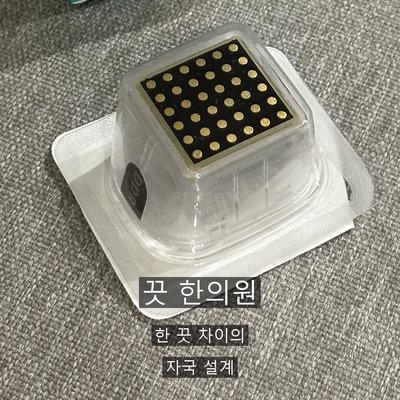
When our Kkeut Korean Medicine Clinic's Potenza treatment is combined with skin boosters, a specialized pumping tip is used to deliver the medication deep into the dermal layer.
This pumping tip utilizes the positive pressure created as the needles exit the skin to effectively push the medication into the dermis. This can contribute to a higher drug absorption rate than conventional injection methods.
The needle depth is adjusted according to each individual's concern area, and treatment density is precisely controlled through a layering technique.
For hygiene and safety, one treatment tip is used per person and immediately discarded after use.
Kkeut Korean Medicine Clinic ensures that all promised shots are delivered, striving to evenly distribute energy across the entire skin.
During Juvlook procedures, the correct amount is confirmed and extracted in front of the patient before use.
Frequently Asked Questions
Q. Is the treatment the same for red acne scars and indented acne scars?
A. Acne scars require different approaches depending on their type. Redness or hyperpigmentation may require treatments aimed at improving pigmentation, while indented scars may need procedures that promote collagen production within the dermis. At Kkeut Korean Medicine Clinic, we clearly distinguish and explain scar types from the initial consultation.
Q. How many Potenza sessions are recommended for acne scars?
A. For the improvement of acne scars, we generally recommend 3 to 5 sessions at intervals of 4-6 weeks. However, the number of sessions may vary depending on individual skin condition.
Q. How long does redness last after acne scar treatment?
A. Redness that appears immediately after acne scar treatment usually subsides within 1-2 days. However, depending on the treatment intensity or individual skin type, redness may persist for up to a week, and there can be individual differences in this reaction.
Kkeut Korean Medicine Clinic's Philosophy
At Kkeut Korean Medicine Clinic, we strive to provide a more suitable approach to patients through customized plans that consider scar types and layering procedures using specialized pumping tips.
At Kkeut Korean Medicine Clinic, we verify the exact dosage for Juvlook procedures directly in front of patients and use methods that minimize injection discomfort, helping patients receive treatment comfortably.
Kkeut Korean Medicine Clinic adheres to the 'one tip per person' principle and ensures sufficient shots, considering both hygiene and treatment effectiveness.
You can experience the transformation created by meticulous differences at Kkeut Korean Medicine Clinic.
Related notes
Procedure notes worth reading next.


Loading menu…