

Don't just look at hair removal prices! 3 things to check first Beomgye, Pyeongchon, Beomgye Station, Pyeongchon Station, Hogye-dong, Bisan-dong, Gwanyang-dong, Dongan-gu, Indeogwon, Geumjeong, Anyang
10/14/2026
This is a procedure note for Don't just look at hair removal prices! 3 things to check first at Gyeonggi Anyang Beomgye KKEUT Korean Clinic.
Laser hair removal costs vary by medical institution, so people usually start by looking at the price.
However, even for the same laser hair removal procedure, the details can vary depending on the equipment used, the total number of sessions, and the post-treatment care method.
Before undergoing laser hair removal, there are three important factors to consider in addition to the cost.
It may be more reasonable to compare costs after first checking these points.
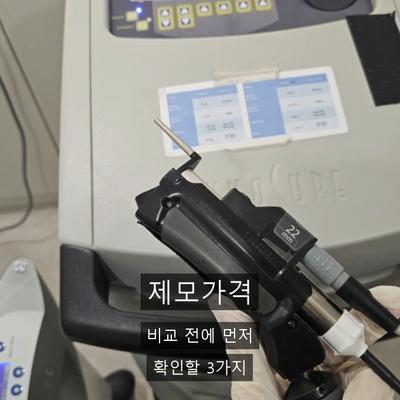
First, check the treatment equipment and cooling method
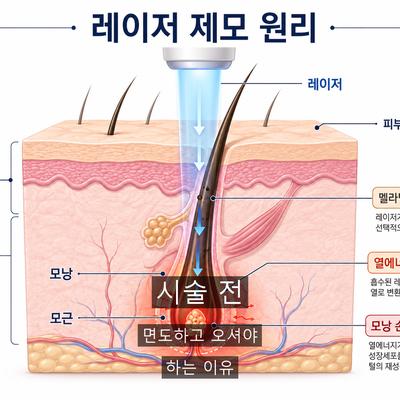
Laser hair removal utilizes the principle where laser energy is absorbed by the dark melanin pigment in hair, converting into heat. This heat damages the hair follicles and roots that produce hair, thereby aiding in hair removal.
As laser heat is delivered to the hair, the surrounding skin can also become warm. Therefore, the cooling function of the treatment equipment plays a crucial role in ensuring comfort and protecting the skin during the procedure.
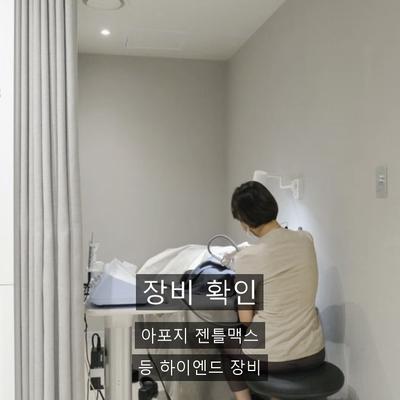
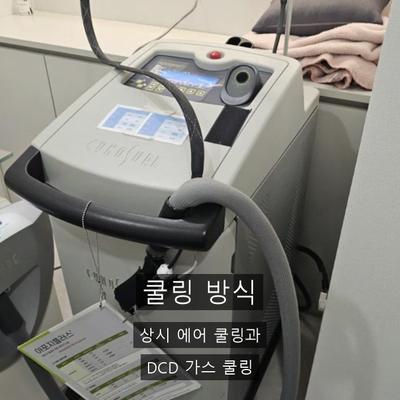
Apogee devices are designed to continuously spray powerful cold air during the procedure, ensuring uninterrupted skin cooling while laser energy is being delivered.
GentleMax and Clarity devices use a DCD (Dynamic Cooling Device) method to spray cooling gas. While this may offer superior skin cooling effects compared to cold air, the gas is not continuously sprayed.
The cooling gas used in the DCD method is a consumable, which can lead to relatively higher treatment costs when using these devices.
Therefore, when comparing hair removal costs, it helps to first understand what type of equipment is used for the procedure, allowing for a comparison based on the same criteria.
Inquiring about the treatment equipment is a simple question, and the clarity of the answer alone can give you an idea of the treatment standards.
We use widely recognized laser devices such as Apogee and GentleMax, which are approved for their safety and effectiveness.
Second, the importance of total treatment sessions and maintenance
Laser hair removal is expected to show improvement when energy is delivered to hair follicles in the active growth phase.
Since not all hair follicles are in the growth phase simultaneously, multiple repeat treatments may be necessary to achieve satisfactory hair removal results.
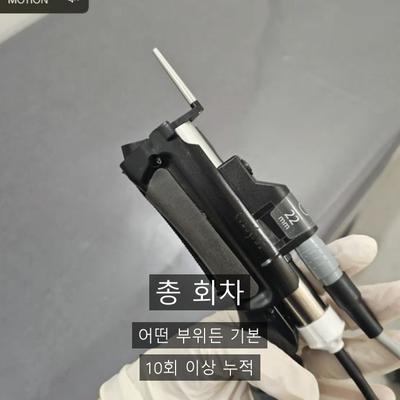
For most treatment areas, a minimum of 10 sessions is generally recommended. For men's beards, 20 or more sessions, spanning at least one year, may be required.
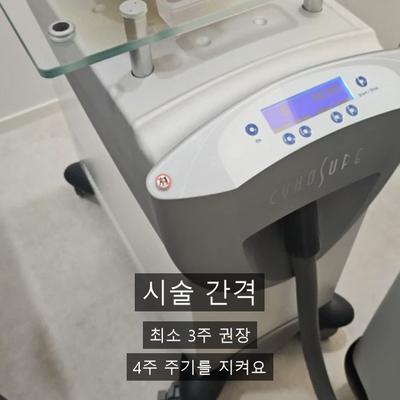
A treatment interval of at least 3 weeks, and generally 4 weeks, is recommended.
This interval is designed to protect the skin by considering its exfoliation and regeneration cycle, and to allow sufficient time for the next growth phase hair to emerge.
This treatment is closer to semi-permanent hair removal rather than permanent hairlessness. Even after achieving the desired hair removal, undergoing maintenance sessions approximately once every 2-3 months can be beneficial.
Therefore, it can be difficult to assess the total expenditure based solely on the cost of a single session. It is advisable to estimate the overall cost by considering the total number of necessary sessions and maintenance treatments.
Calculating based on the total number of sessions required for each treatment area will be a more accurate comparison method.
The face has a diverse distribution of hair, from fine vellus hair to thick beard hair, making it crucial to adjust laser energy according to the specific characteristics of the hair.
Areas like the underarms, arms, and legs have a large surface area and relatively distinct melanin pigment in the hair, making them areas where laser response tends to be quite effective.
For sensitive areas like Brazilian hair removal, effectively managing pain during the procedure can be important.
It's also a good idea to ensure you receive thorough information regarding the total number of treatment sessions and intervals during your consultation.
Pre-treatment preparation guide
Before your laser hair removal treatment, you must shave the area beforehand.
If hair remains long, laser energy can be unnecessarily expended on the skin surface, increasing the risk of burns, and preventing sufficient energy from reaching the necessary hair follicles.
During the period of laser hair removal treatment, you should refrain from plucking hair.
This is because removing the hair follicles that the laser needs to target can hinder the effectiveness of the treatment.
Shaving after the procedure is best done from the day after the skin has stabilized. For about 1-2 days, it is advisable to refrain from activities that can generate heat in the skin, such as strenuous exercise, saunas, or alcohol consumption.
The pain felt during the procedure can vary individually, but it is often described as similar to a stinging sensation after applying an ice pack. As the number of treatment sessions increases and hair quantity decreases, the pain may gradually lessen.
During the process of the laser directly delivering heat to the hair follicles, skin reactions such as folliculitis may occur. In such cases, managing it with regenerative creams can help reduce discomfort over time.
While pre-treatment preparations are relatively simple, adhering to them well helps increase satisfaction with hair removal and maintain skin health.
Third, personalized treatment plans and delicate care
Even when using the same laser equipment, the treatment design must be tailored differently, considering various factors such as individual hair thickness, density, and skin tone.
Thick, dark hair is rich in melanin pigment, so delivering strong laser energy with short pulses may risk irritating the epidermis.
In such cases, treatment can be performed by utilizing a longer pulse width to adjust the laser energy for gentler delivery to the skin, thereby reducing the burden on the epidermis.
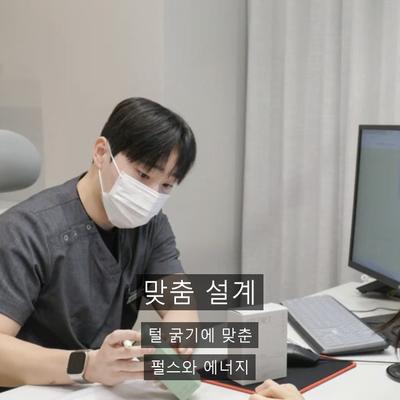
Conversely, for thick and dense hair, the energy density is appropriately adjusted during treatment to ensure sufficient thermal energy is delivered to the hair follicles.
Fine, light hairs with less melanin pigment may have a relatively weaker response to laser. Therefore, during treatment, the energy is adjusted or repeated to ensure sufficient thermal energy is delivered to the hair follicles.
For areas with dense hair, energy is divided and applied to prevent burns from excessive heat accumulation, and for darker skin tones, the output is finely adjusted during treatment.
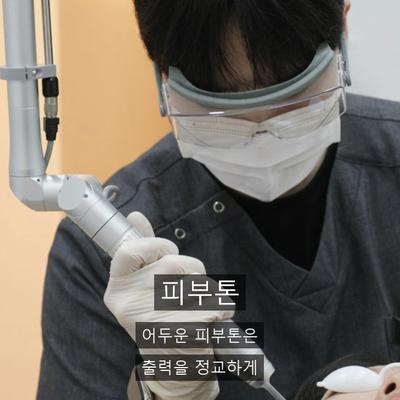
For these reasons, it is considered important to thoroughly check hair thickness and skin tone during pre-treatment consultation.
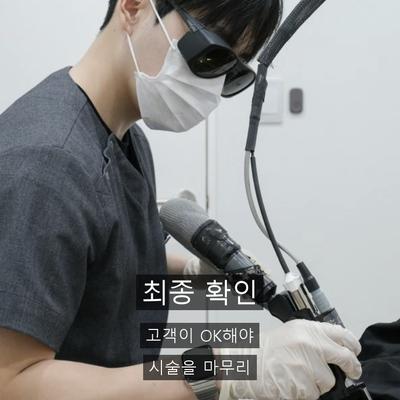
Before the treatment is finished, we meticulously double-check for any missed areas.
To enhance treatment satisfaction, we only conclude the treatment after the patient's final confirmation.
If there are areas of particular concern or requiring intensive care, energy can be more finely adjusted and applied to those specific areas.
Whether such meticulous planning is included in the treatment cost can be confirmed through explanation during the consultation.
The invisible planning and final verification process of the treatment affect its overall completeness.
Frequently Asked Questions
Q. Why do hair removal costs vary by area?
A. Hair removal costs may vary depending on the treatment area's size, hair thickness and density, and the type of medical equipment used.
The time required for treatment varies with the area's size, so there may be differences in the information provided for each area.
During the consultation, we explain in detail the desired treatment area and the necessary number of sessions.
Q. When comparing hair removal treatment costs, should the use of anesthetic cream also be considered?
A. Anesthetic cream primarily acts only on the skin's surface, making it difficult for the anesthetic effect to sufficiently reach the hair follicles. Therefore, it is difficult to consider it a primary criterion for comparing hair removal treatment costs.
Pain experienced during treatment can be alleviated by cooling alone using cooling air or an ice cooler.
We utilize basic cooling methods to reduce pain during treatment.
Q. If hair removal costs are similar, will the treatment results be the same everywhere?
A. It is difficult to say they will be the same.
Even if hair removal treatment costs are similar, there may be differences in the treatment experience and results depending on the type of equipment used, the pulse and energy setting methods, the guidance on the total number of sessions, and the final verification process.
During the consultation, we explain these four factors in detail.
Our Medical Team's Philosophy
We meticulously adjust the pulse duration and energy density according to hair thickness, density, and skin tone during treatment, which can contribute to personalized care.
We strive to enhance treatment satisfaction through a procedure where treatment is concluded only after the patient's final confirmation, and by focusing energy on areas of concern.
We use well-known devices such as Apogee and GentleMax, considering safety during treatment and striving to achieve the expected results.
A meticulous approach tailored to each individual — you can experience this during the treatment process.
Loading menu…