

Café au Lait Spots: Why They Aren't Removed in a Single Session, and Management Methods Beomgye, Pyeongchon, Beomgye Station, Pyeongchon Station, Hogye-dong, Bisan-dong, Gwanyang-dong, Dongan-gu, Indeogwon, Geumjeong, Anyang
8/19/2026
This is a procedure note for Café au Lait Spots: Why They Aren't Removed in a Single Session, and Management Methods at Gyeonggi Anyang Beomgye KKEUT Korean Clinic.
Cafe-au-lait spots are representative pigmentary skin lesions that appear in a wide range of shades, from light brown to deep coffee-with-milk color.
They have relatively clear borders and can appear on various parts of the body, including the face, torso, and limbs.
Their size varies greatly among individuals, from small dot-like shapes to large palm-sized spots.
If they appear in noticeable areas like the face or neck, interest in management tends to increase.
Many people believe these pigmentary lesions can be completely removed with a single treatment, but often it's not that simple.
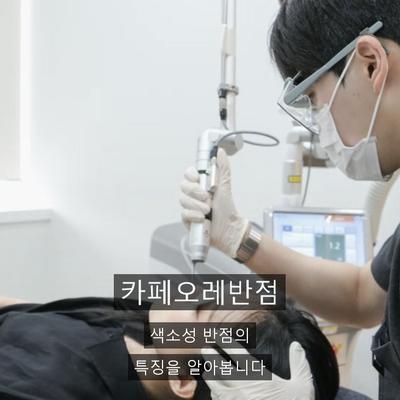
Cafe-au-lait spots, why do they appear?
These are pigmentary lesions formed by the localized overactivation of melanocytes, and melanin often distributes widely from the epidermis to the upper dermis.
The depth at which the pigment is located is often uneven compared to typical melasma or blemishes.
While they commonly appear congenitally, their size or shade can change subtly during the growth process.
They can also be associated with certain genetic disorders, so if multiple spots appear together, differentiation through specialist consultation is necessary.
Reasons why they are not removed at once and show a tendency to recur
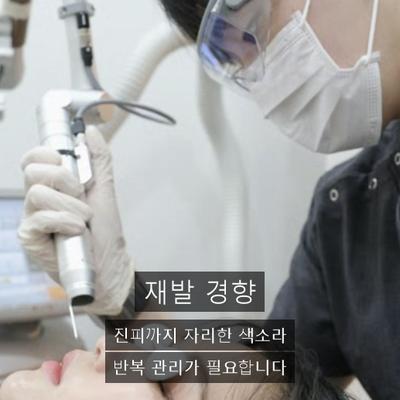
Since the pigment is widely distributed across the epidermal-dermal junction, laser energy first reacts with melanin closer to the surface, and deeper pigment tends to gradually lighten only after multiple irradiation sessions.
Pigment located deep within the dermal layer, in particular, takes more time for the laser to reach and react with it.
If the melanocytes that produce the pigment themselves remain, they may show a tendency to recur and darken over time.
For these reasons, managing cafe-au-lait spots is a condition that requires cumulative treatments and consistent follow-up, rather than a one-time procedure.
As it is difficult to guarantee complete disappearance within a short period, the process of understanding the expected outcome through thorough consultation is important.
For this reason, clinics need to thoroughly explain the expected number of sessions and outcomes during the initial consultation.
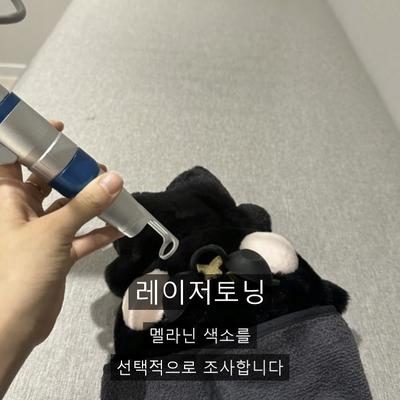
Principle of Laser Toning
Laser toning is a widely used method for managing pigmentary lesions.
A Q-switched or picosecond laser with a 1064nm wavelength selectively absorbs into melanin pigment, minimizing damage to surrounding normal tissue while destroying only the pigment.
The moment the laser is irradiated, melanin particles are finely shattered, undergoing a process where they gradually change to a lighter color.
This wavelength is also widely used for improving melasma, blemishes, hyperpigmentation, and dull skin tone.
Sessions and Frequency
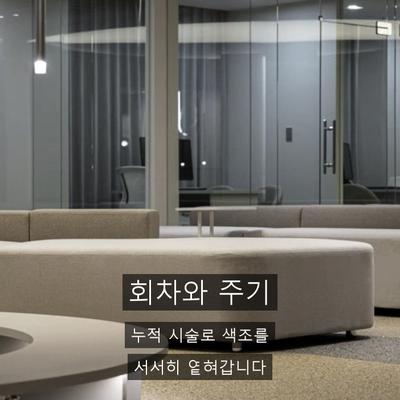
Since cafe-au-lait spots have a wide range of pigment depth and area, laser toning is often recommended for 10 or more cumulative sessions.
Rather than repeating with the same energy in each session, an approach of observing skin reactions and gradually adjusting the intensity is necessary.
For managing such pigmentary lesions, proceeding with multiple divided treatments within a safe range, rather than using excessively strong energy at once, is more suitable.
Checking the degree of pigment response in each session and determining the timing of the next treatment is the basic direction for management.
Post-Treatment Care
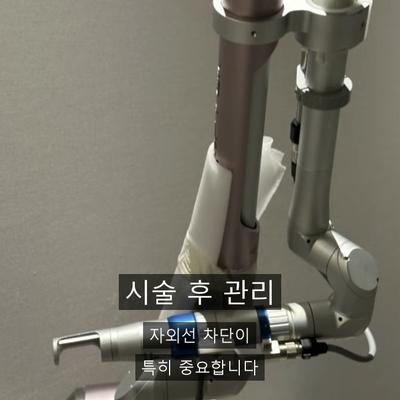
Sun protection is important after laser toning treatment.
Exposure to UV rays can re-stimulate melanocytes, worsening hyperpigmentation and hindering the maintenance of treatment effects.
Gentle cleansing and sufficient moisturizing help skin recovery.
Habits such as squeezing the pigmented area with hands or forcibly peeling off dead skin can worsen hyperpigmentation and should be avoided.
Drinking plenty of water and avoiding irritating cosmetics also help skin recovery.
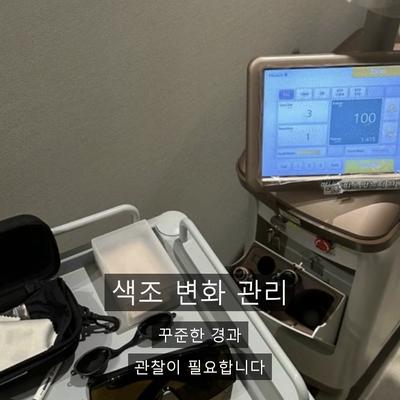
If there are changes in shade or size, documenting them with photos and comparing them at the next visit can also be helpful.
Laser toning is a representative method for managing the shade of such pigmentary lesions, but the characteristics of the lesion and the speed of response vary from person to person.
Rather than expecting complete disappearance with a single treatment, it is more realistic to approach it with the perspective of gradually lightening the shade and managing the tendency of recurrence together.
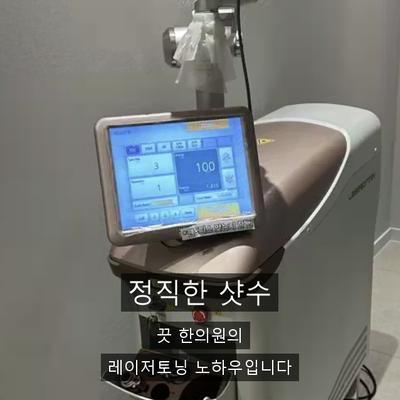
Kkeut Korean Medicine Clinic believes that for lesions with uneven pigment depth, an honest shot count determines the outcome.
Kkeut Korean Medicine Clinic performs laser toning with over 2000 shots and guides patients to confirm the shot count with the director.
Before treatment, Kkeut Korean Medicine Clinic carefully examines pigment distribution and depth and provides a session-by-session treatment plan.
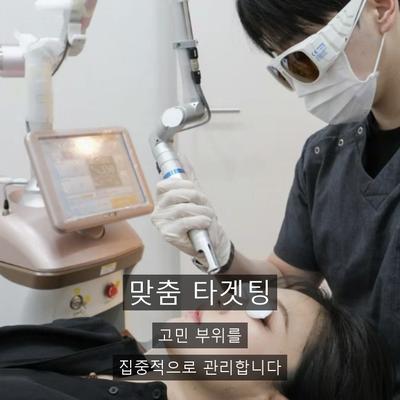
If the areas of concern are clearly visible, Kkeut Korean Medicine Clinic approaches by targeting those areas a bit more intensively.
Kkeut Korean Medicine Clinic performs treatments by observing the skin's reaction and gradually increasing energy, rather than repeating with the same intensity in every session.
Kkeut Korean Medicine Clinic avoids excessive treatment by adjusting the plan for subsequent sessions in areas where pigment response is slow.
Frequently Asked Questions
Q. Can cafe-au-lait spots be removed with laser toning alone?
A. Cafe-au-lait spots often have uneven pigment depth, making it difficult for laser toning alone to completely remove them in a short period, and the number of sessions required varies depending on the extent of the pigmentation. Kkeut Korean Medicine Clinic provides the following answer.
Q. How many laser toning sessions are recommended for cafe-au-lait spots?
A. For cafe-au-lait spots, while it varies depending on the extent and depth of pigmentation, usually 10 or more cumulative sessions are recommended, and the recommended number of sessions may increase if the pigmentation is widely spread or deeply embedded.
Q. Why do cafe-au-lait spots tend to recur?
A. If the melanin-producing cells themselves remain, cafe-au-lait spots can darken again over time, making follow-up observation important.
Q. How should I care for cafe-au-lait spots after treatment?
A. After treatment for cafe-au-lait spots, sun protection and adequate moisturizing play a crucial role in preventing repigmentation.
Q. Do cafe-au-lait spots fade with age?
A. It is difficult to definitively say that cafe-au-lait spots naturally fade, so consistent laser toning management and follow-up observation are both necessary.
Kkeut Korean Medicine Clinic's Sincerity
Kkeut Korean Medicine Clinic provides differentiated results through an honest guarantee of shot counts.
Kkeut Korean Medicine Clinic enhances patient satisfaction through focused targeting of problem areas.
Kkeut Korean Medicine Clinic pursues both safety and effectiveness simultaneously through gradual upward energy adjustments in each session.
Different results with a subtle difference, experience it at Kkeut Korean Medicine Clinic.
Loading menu…