

Causes of Arm Sun Spots and Effective Laser Treatment Methods Beomgye, Pyeongchon, Beomgye Station, Pyeongchon Station, Hogye-dong, Bisan-dong, Gwanyang-dong, Dongan-gu, Indeogwon, Geumjeong, Anyang
This is Gyeonggi Anyang Beomgye KKEUT Korean Clinic's procedure note on Causes of Arm Sun Spots and Effective Laser Treatment Methods.
When age spots start appearing on the arms, many people wonder about their nature and the possibility of removal.
In this article, we will explain, in order, the characteristics of age spots, the essential pre-procedure process, and how Kkeut Korean Medicine Clinic approaches their treatment.
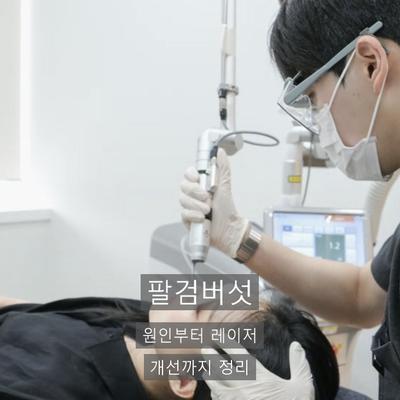
Age spots that appear on the arms are pigmentary lesions located in the epidermal layer.
Age spots are one of the typical pigmentary lesions that appear when melanin pigment is deposited in the epidermal layer, similar to lentigines or freckles.
The core of the lesion is melanin, which produces pigment. Therefore, the primary goal of the procedure is to precisely target this melanin.
Although they all appear as brown spots, lentigines, freckles, and age spots are distinctly different lesions. Accurately differentiating the type of spot that has appeared on the arm is the first step in treatment.
It is difficult to understand the characteristics of pigmentary lesions solely by their appearance. Accurately diagnosing the type of lesion beforehand becomes an important criterion for all treatment decisions.
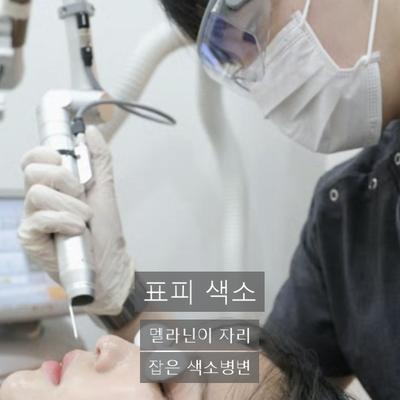
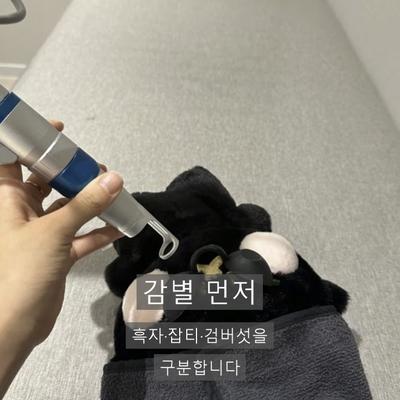
The most important thing before removal is accurate differentiation.
It is difficult to conclude that lesions are the same just because they look similar. Performing a procedure without accurate differentiation can pose a risk of side effects such as hyperpigmentation, so a thorough diagnostic process must take precedence.
At Kkeut Korean Medicine Clinic, after photographing the skin condition with the MarkVu (MarkVu) diagnostic device, the director personally differentiates lentigines, freckles, and age spots thoroughly.
Even when multiple lesions, like arm age spots, are widely spread, the targets for treatment are precisely distinguished one by one based on the imaging results. This signifies that it is not just a simple procedure but a treatment based on accurate diagnosis.
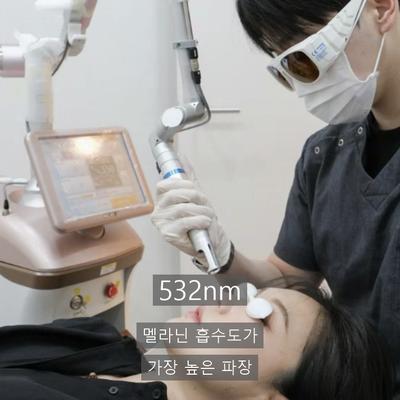
Pigment Targeting Method Using 532nm Wavelength
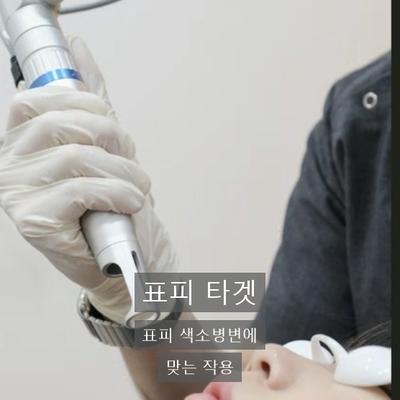
The 532nm wavelength has a relatively high melanin absorption rate, making it an efficient wavelength for removing pigmentary lesions.
This wavelength primarily acts on the epidermal layer. Therefore, it is considered suitable for treating epidermal pigmentary lesions such as lentigines.
Laser devices such as Lipot (Revlite/Ruby series) also utilize the 532nm wavelength. Kkeut Korean Medicine Clinic enhances accessibility by offering treatments using the same wavelength.
Overall skin tone issues, not distinct spots, are resolved with toning.
There are differences in treatment methods between distinct brown spots and dull skin tone spread across the entire arm.
Laser toning is a procedure aimed at alleviating hyperpigmentation and improving skin tone, and it operates on the principle of the 1064nm wavelength selectively destroying melanin.
Kkeut Korean Medicine Clinic's toning procedure fundamentally involves over 2000 shots, with energy more concentrated on particularly bothersome areas. Instead of using the same method every session, the energy is progressively adjusted according to the skin condition.
Laser toning is a procedure that generally requires consistent progress over 10 or more sessions. Rather than being a procedure completed in one go, it is approached as a method for gradually achieving skin improvement.
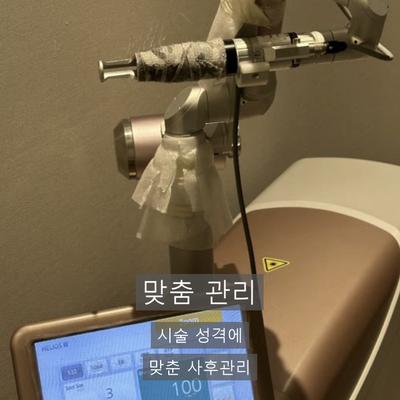
Post-procedure care is provided considering the individual characteristics of each treatment.
Lentigo treatment is not a method that directly creates wounds on the skin surface. For this reason, Kkeut Korean Medicine Clinic often does not use DuoDerm gel after the procedure.
This is because it can, in fact, cause unnecessary irritation. While DuoDerm gel is used for procedures that cause wounds, such as mole removal, the same post-care is not applied to all treatments.
The number of treatments and recovery period may vary individually depending on the condition of the lesion, so after thorough consultation with the medical staff, detailed guidance will be provided.
Kkeut Korean Medicine Clinic's Approach to Age Spot Treatment
Kkeut Korean Medicine Clinic places great importance on the pre-procedure stage. After accurately identifying the type of pigmentary lesion through MarkVu imaging and the director's meticulous differentiation, the appropriate laser is carefully selected.
There is a clear difference compared to procedures performed in a uniform manner without diagnosis. Reducing the risk of hyperpigmentation from before the procedure is a fundamental principle of Kkeut Korean Medicine Clinic.
Kkeut Korean Medicine Clinic performs procedures utilizing a 532nm wavelength, similar to commonly used laser devices. As this wavelength primarily acts on the epidermis, it can be effectively applied to epidermal pigmentary lesions.
The toning procedure is performed based on over 2000 shots, and after the procedure, patients go through a process of directly verifying the irradiated shot count with the director.
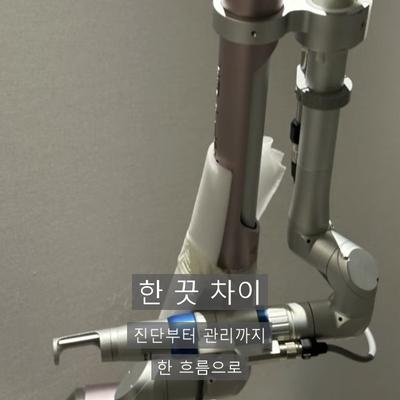
From accurate diagnosis to appropriate wavelength selection and delicate post-care, Kkeut Korean Medicine Clinic's treatment approach follows a single, organic flow.
Frequently Asked Questions
Q. What type of laser is primarily used to treat arm age spots?
A. Arm age spots are classified as epidermal pigmentary lesions, so approaches using the 532nm wavelength, which has a high melanin absorption rate, are common. At Kkeut Korean Medicine Clinic, we first accurately differentiate the lesion and then determine the treatment method tailored to the individual.
Q. Is a diagnostic process absolutely necessary before arm age spot treatment?
A. Lesions that appear similar to arm age spots are diversely categorized as lentigines, freckles, actual age spots, and more. Performing a procedure without clear differentiation can lead to risks such as hyperpigmentation. At Kkeut Korean Medicine Clinic, the director personally differentiates lesions after MarkVu imaging.
Q. Should DuoDerm gel be used after arm age spot treatment?
A. Procedures for arm age spots or lentigines generally do not create wounds on the skin surface, so DuoDerm gel is often not used. Unnecessarily applying it could, in fact, irritate the skin.
Kkeut Korean Medicine Clinic's Treatment Philosophy
At Kkeut Korean Medicine Clinic, we strive to help patients achieve highly satisfactory results through MarkVu imaging and the director's direct lesion differentiation.
Kkeut Korean Medicine Clinic is committed to helping improve skin by utilizing the 532nm wavelength, which has a high melanin absorption rate.
At Kkeut Oriental Clinic, we implement post-procedure care tailored to the unique characteristics of each treatment. We prioritize our patients' safety and assist with managing the expected effects after treatment.
Paying attention to even the smallest details, Kkeut Oriental Clinic's treatments aim to find the most suitable approach for each individual patient.
Loading menu…