

Why Hand Melasma Requires a Different Approach from Facial Melasma Beomgye, Pyeongchon, Beomgye Station, Pyeongchon Station, Hogye-dong, Bisan-dong, Gwanyang-dong, Dongan-gu, Indeogwon, Geumjeong, Anyang
9/5/2026
This is a procedure note for Why Hand Melasma Requires a Different Approach from Facial Melasma at Gyeonggi Anyang Beomgye KKEUT Korean Clinic.
Although melasma on the back of the hand is a hyperpigmentation similar to facial melasma, its underlying causes and management methods should be viewed differently.
While the face is a part that is managed daily with cosmetics and sunscreen, the back of the hand is an area where sun protection is easily neglected.
During daily outdoor activities such as driving, hiking, and walking, the back of the hand is one of the areas most exposed to UV rays.
Unlike the face, the back of the hand cannot be covered by a mask or hat, meaning it is exposed to UV rays for longer periods.
This accumulated UV exposure leads to excessive melanin production, resulting in hyperpigmentation on the back of the hand.
The skin on the back of the hand is thinner and has less subcutaneous fat than facial skin, making hyperpigmentation appear more prominent.
Sebum glands and collagen density are also lower than on the face, leading to a slower natural regeneration rate.
Blood flow is also less than on the face, so once pigmentation settles, the rate at which it lightens through metabolism is relatively slower.
In particular, sunscreen is often applied less diligently to the back of the hands than to the face, making pigmentation accumulation more likely.
For this reason, hyperpigmentation on the back of the hand tends to leave darker marks and lighten more slowly than on the face.
If you are concerned about pigmentation on the back of your hand, we recommend not neglecting it and seeking an accurate diagnosis first.
Pigmentation on the back of the hand starts as light brown but can darken and spread if left untreated, making early management crucial.
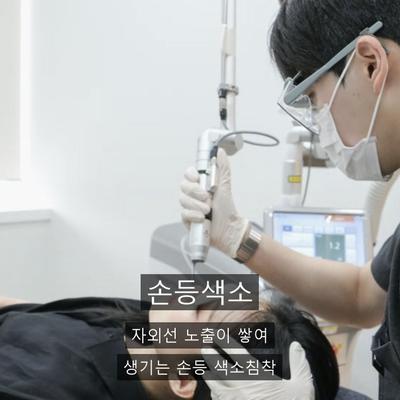
Laser toning is the most commonly used treatment for managing melasma on the back of the hand.
Laser toning utilizes the principle where a 1064nm wavelength laser is selectively absorbed by melanin pigment.
The energy absorbed by the pigment is converted into heat, undergoing a process that finely breaks down melanin particles.
The broken-down pigment gradually fades over time through the body's metabolic processes.
This method, performed in multiple sessions with low energy, allows for a targeted approach to clear pigmentation while minimizing skin irritation.
For this area, gradually clearing pigmentation through cumulative treatments is safer than pursuing immediate effects.
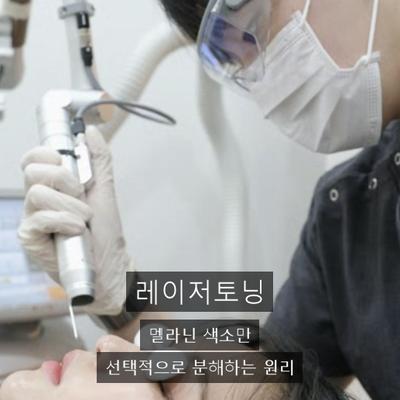
Since the back of the hand has slower skin regeneration than the face, the number of sessions and intervals should be designed differently.
Cumulative treatments are typically performed at intervals of around 4 weeks, with some cases requiring more than 10 sessions depending on the pigmentation's condition.
If the treatment intervals are too short, recovery can be slow due to the nature of hand skin, potentially leading to accumulated irritation.
The back of the hand is an area with a lot of joint movement, so care must be taken with posture fixation and irradiation angle during treatment.
For melasma on the back of the hand, consistent, low-irritation repetition is key, rather than strong stimulation.
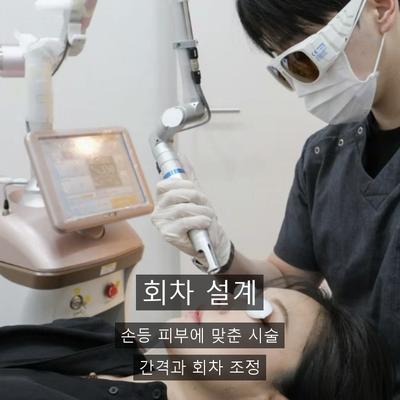
Post-treatment care also needs to be managed differently than for the face.
The back of the hand is an area where sunscreen application habits are often lacking, making the risk of recurrence high even after treatment.
It is necessary to develop a habit of meticulously applying sunscreen to the backs of your hands when going out.
Sunscreen must be reapplied every 2-3 hours to maintain its effectiveness on the back of the hand.
Even in winter, there are many days when the UV index is not low, so sun protection for the back of the hand should be maintained regardless of the season.
As it's an area frequently exposed to dishwashing or detergents, it's recommended to use a low-irritation regenerating cream alongside treatment.
It's easy to assume that applying whitening cream to the back of the hand will have the same effect as on the face, but the skin structure of the hand is different, leading to variations in response speed.
Ultimately, pigmentation on the back of the hand is a pigmentary disorder similar to facial melasma, but due to differences in skin thickness, regeneration rate, and UV exposure habits, the approach to treatment must also differ.
Kkeut Korean Medicine Clinic approaches pigmentation concerns in this area with the same dedication as facial melasma.
Kkeut Korean Medicine Clinic guarantees over 2000 shots when performing laser toning for melasma on the back of the hand.
Since sufficient shots are required to evenly clear the pigmentation, the number of shots is confirmed with the director after the treatment.
Kkeut Korean Medicine Clinic records the condition of pigmentation on the back of the hand with photos before treatment to compare changes session by session.
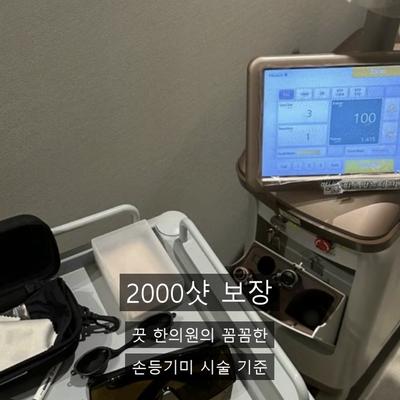
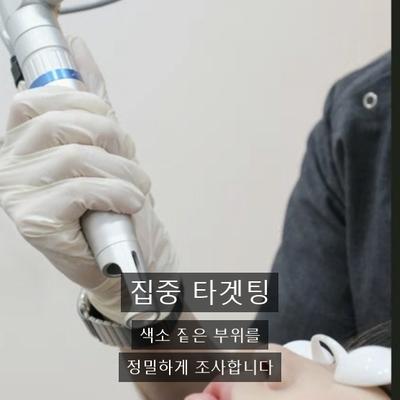
Kkeut Korean Medicine Clinic more intensively targets localized areas of concern, such as the back of the hand.
This method involves differentiating between areas where pigment is densely concentrated and areas where it is lightly dispersed, and applying different energy levels.
Kkeut Korean Medicine Clinic does not repeat with the same intensity each session but gradually increases the energy.
This method involves checking the skin condition of the back of the hand each session and adjusting the energy to reduce pigmentation without over-stressing the skin.
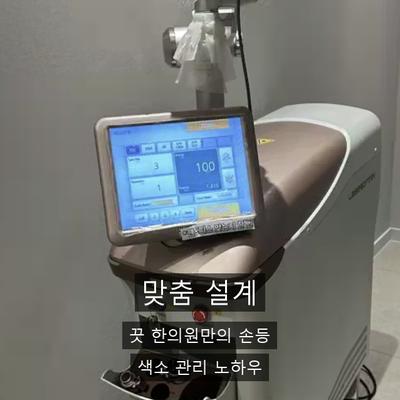
Customized Design Only Possible at Kkeut Korean Medicine Clinic
Pigmentation on the back of the hand is an area that requires understanding its characteristics and a specific approach for management without recurrence.
Frequently Asked Questions
Q. Can melasma on the back of the hand be managed with the same treatment as facial melasma?
A. Melasma on the back of the hand can also be managed with laser toning, but because skin thickness and regeneration speed differ, the number of sessions and energy intensity are designed differently. At Kkeut Korean Medicine Clinic, we proceed with a treatment protocol tailored to the skin on the back of the hand.
Q. How many treatment sessions are typically needed for melasma on the back of the hand?
A. While it varies depending on the pigment concentration, we generally recommend around 10 cumulative sessions for melasma on the back of the hand. Kkeut Korean Medicine Clinic gradually increases the energy with each session.
Q. How can I prevent melasma on the back of the hand from reappearing after treatment?
A. Since UV exposure is a major cause of melasma on the back of the hand, consistent application of sunscreen after treatment is essential to reduce recurrence.
Q. Is laser toning for melasma on the back of the hand painful?
A. Since it is performed by dividing it into multiple passes with low energy, the pain during melasma treatment on the back of the hand is generally mild.
Q. How are melasma on the back of the hand and seborrheic keratosis (age spots) distinguished?
A. Seborrheic keratosis often has clearer borders and a raised appearance, whereas melasma on the back of the hand frequently appears as a relatively flat, spread-out form. For an accurate distinction, it is safest to confirm through a medical consultation.
The Sincerity of Kkeut Korean Medicine Clinic
Kkeut Korean Medicine Clinic provides differentiated results through meticulous laser toning for melasma on the back of the hand, guaranteeing over 2000 shots.
Kkeut Korean Medicine Clinic enhances patient satisfaction through treatments that target problematic areas like the back of the hand more intensively.
Kkeut Korean Medicine Clinic pursues both safety and effectiveness simultaneously by designing treatments with a gradual increase in energy in each session.
A subtle difference, a distinct result — Experience it at Kkeut Korean Medicine Clinic.
Related notes
Procedure notes worth reading next.

3 Criteria to Consider When Choosing a Clinic for Melasma Treatment
2026. 10. 5.

Criteria for Choosing a Melasma Treatment Clinic: Accurate Diagnosis, Customized Treatment Plan, Thorough Aftercare
2026. 10. 9.

Melasma Always Comes Back? The Solution to Persistent Recurrence is 'Laser Treatment'.
2025. 11. 28.
Loading menu…