

GentleMax Pro Plus Hair Removal, how many sessions does it take to see results? Beomgye, Pyeongchon, Beomgye Station, Pyeongchon Station, Hogye-dong, Bisan-dong, Gwanyang-dong, Dongan-gu, Indeogwon, Geumjeong, Anyang
This is Gyeonggi Anyang Beomgye KKEUT Korean Clinic's procedure note on GentleMax Pro Plus Hair Removal, how many sessions does it take to see results.
One of the most frequently asked questions by those considering GentleMax Pro Plus hair removal is how many sessions are needed before they can expect to see results.
This article sequentially explains why multiple sessions are required for hair removal, the appropriate treatment interval, and the changes that can occur as the treatment progresses.
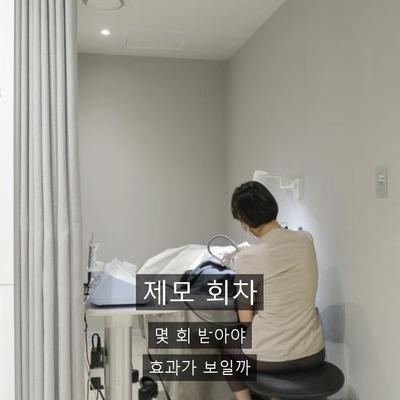
Why multiple laser hair removal sessions are necessary
Laser energy is selectively absorbed by the dark melanin pigment in the hair, converting into heat. This generated heat damages the hair follicles and papilla involved in hair growth.
However, a limitation of lasers is that they are only effective on hair follicles in the active growth phase, where melanin activity is vigorous.
Even hairs in the same area are in various cycles, including the growth phase, regression phase, and resting phase. Hairs in the growth phase are characterized by their random distribution during each treatment.
While a single treatment reduces hairs in the growth phase, hairs in the resting phase must wait until they transition back into the growth phase. This is why repeated treatments are required to align with this hair cycle.
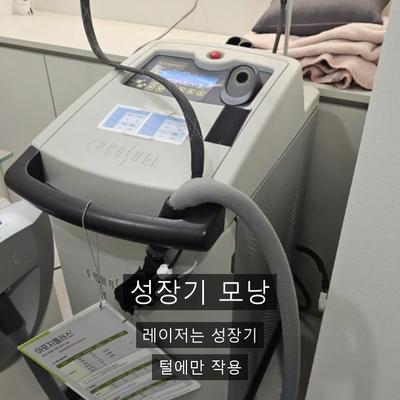
How many sessions are needed to see results? Usually, 10 or more sessions are recommended.
Generally, for most areas, 10 or more treatment sessions are recommended. This is because a sufficient accumulation of treatments is necessary to ensure that all hair follicles are targeted during their growth phase.
Even if the initial change is less than expected, it does not mean the treatment is ineffective. This is simply a process where hairs that have not yet transitioned into the growth phase remain, and you can expect a gradual reduction in hair as the number of sessions increases.
The required number of sessions can vary depending on the treatment area. For men's beards, 20 or more sessions and over a year may be needed, while for other areas, 10 or more sessions are recommended for stable maintenance.
Facial peach fuzz, thick beards, armpits, arms and legs, and sensitive special areas each have distinct hair characteristics and skin conditions. Therefore, the laser energy settings are adjusted accordingly.
The treatment interval is a minimum of 3 weeks, generally 4 weeks is recommended.
The recommended treatment cycle is a minimum of 3 weeks, and typically a 4-week interval is advised. This is because the skin's keratin regeneration cycle is about 4 weeks, and adhering to this interval helps protect the skin and allows new hair in the growth phase to emerge.
The exact treatment schedule can be adjusted according to the area and individual skin condition. If there is redness or folliculitis remaining in the treated area, it is advisable to check the skin condition first before determining the date for the next treatment.
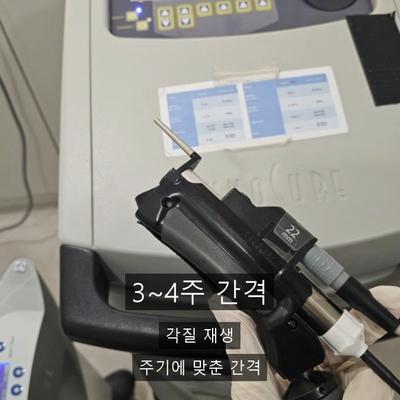
Changes in pain and skin reactions as treatment sessions progress
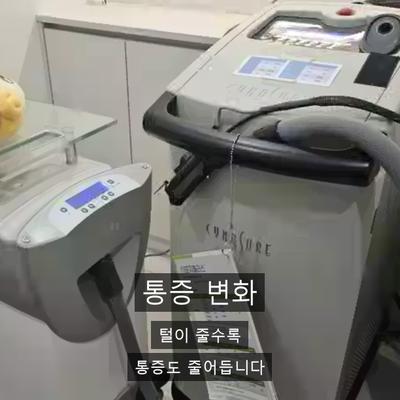
The pain felt during treatment may be similar to receiving treatment while an ice cooler is held against the skin. As the number of sessions progresses and the amount of hair decreases, the pain will also significantly reduce.
Anesthetic cream primarily acts on the skin surface and is difficult to provide an anesthetic effect deep into the hair roots. This is not a medically essential part and is often used mostly to provide psychological comfort.
Due to the nature of the treatment, which directly delivers heat to the hair follicles, folliculitis may sometimes occur on the skin, similar to a cold reaction. In this case, consistent use of a regenerative cream can gradually alleviate the symptoms over time.
Three management methods for maintaining hair removal treatment effects
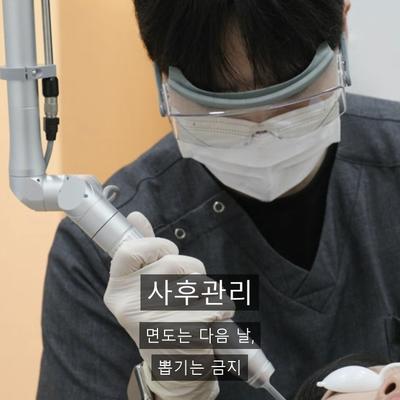
First, we recommend shaving on the day after the treatment, once the skin has sufficiently calmed down, rather than on the day of the treatment. The hair in the treated area may be temporarily limp, making it difficult to shave as cleanly as usual.
Second, absolutely no plucking of hair is allowed during the treatment period. This is because the absence of the hair root, which the laser targets, can diminish the effectiveness of the hair removal treatment.
Third, for 1-2 days after treatment, it is best to avoid activities that can raise body temperature, such as strenuous exercise, saunas, and alcohol consumption.
Shaving before treatment for the same reason. If the hair is long, laser energy can burn on the skin surface, increasing the risk of burns, and preventing sufficient energy from reaching the hair root itself.
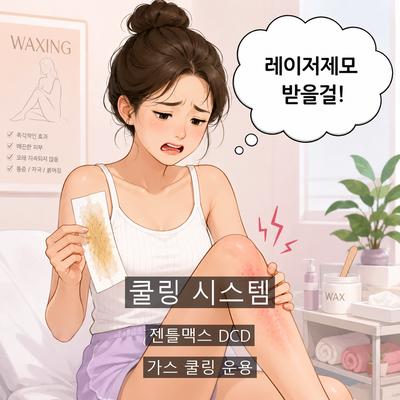
There is no permanent hair removal that ensures hair never grows back; semi-permanent hair removal is the general standard.
Even after completing all recommended treatment sessions, it is advisable to receive maintenance treatments once every 2-3 months. While waxing is temporary and can irritate the skin, laser hair removal damages the hair follicle itself, offering semi-permanent effects.
Kkeut Korean Medicine Clinic's Hair Removal Treatment Design
Kkeut Korean Medicine Clinic uses internationally verified equipment such as Apogee and GentleMax. GentleMax equipment provides more effective cooling performance than air cooling through its DCD gas cooling method, while Apogee equipment is characterized by continuously maintaining air cooling during treatment.
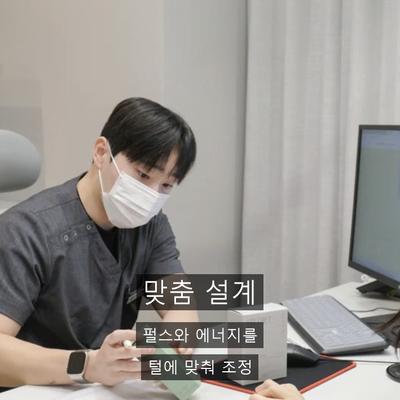
Kkeut Korean Medicine Clinic applies customized settings considering the characteristics of the hair. For example, for thick hair with high melanin content, using a short pulse can lead to a rapid absorption of energy, posing a risk of epidermal damage. Therefore, a method of gently delivering heat with a long pulse is used to protect the skin.
For thick and dark hair, the energy density is set high to allow sufficient heat to accumulate. Conversely, for fine and light hair with less melanin, which may show poor results, the energy is increased or repeated irradiation is applied to ensure heat is effectively delivered to the hair roots.
In areas with dense hair distribution, energy is effectively dispersed to prevent burns due to overheating. Additionally, for darker skin tones, the output is delicately adjusted during treatment to prevent side effects caused by melanin pigment.
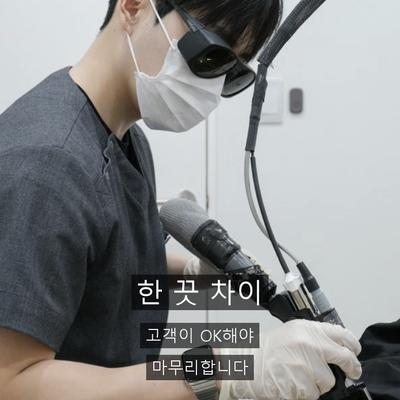
Kkeut Korean Medicine Clinic focuses laser energy more precisely on specific areas of concern for each individual. Before the end of the treatment, they meticulously check if any areas require additional irradiation and only conclude the treatment when the client is ultimately satisfied.
Kkeut Korean Medicine Clinic conducts treatments based on a systematic plan where the number of sessions, intervals, and equipment settings are organically linked.
Frequently Asked Questions
Q. How many GentleMax Pro Plus hair removal sessions are needed before I can expect to see results?
A. For GentleMax Pro Plus hair removal, a minimum of 10 sessions is recommended for most areas. For men's beards, 20 or more sessions and a period of over one year may be required, and Kkeut Korean Medicine Clinic will guide you on the appropriate number of sessions considering the hair condition of each area.
Q. How are GentleMax Pro Plus hair removal treatment intervals determined?
A. GentleMax Pro Plus hair removal maintains a minimum interval of 3 weeks, and generally, a 4-week interval is recommended. This standard considers the skin's keratin regeneration cycle of 4 weeks, and the schedule can be adjusted according to individual skin condition.
Q. After GentleMax Pro Plus hair removal, when can I shave?
A. After GentleMax Pro Plus hair removal, it is recommended to shave starting from the day after the treatment. Plucking hair should be avoided as it can remove the hair roots targeted by the laser, diminishing the treatment's effectiveness.
The Beliefs Kkeut Korean Medicine Clinic Upholds
At Kkeut Korean Medicine Clinic, we delicately adjust pulse and energy density, considering individual characteristics such as hair thickness and skin tone. This customized approach can positively impact treatment results.
Before treatment, Kkeut Korean Medicine Clinic carefully identifies the areas of concern for the patient. After providing a thorough explanation of the treatment scope, we proceed only with final consent, which helps build trust with our patients.
Kkeut Korean Medicine Clinic uses equipment such as Apogee and GentleMax. We focus on utilizing the cooling systems of these devices to reduce skin discomfort or pain that may occur during treatment, striving to ensure patients receive treatment comfortably.
Meticulous and Dedicated Treatment. This is the value Kkeut Korean Medicine Clinic strives for.
Related notes
Procedure notes worth reading next.

Loading menu…