

Ultrasound Lifting Procedures: Shurink vs. Ulthera, A Key Comparison Beomgye, Pyeongchon, Beomgye Station, Pyeongchon Station, Hogye-dong, Bisan-dong, Gwanyang-dong, Dongan-gu, Indeogwon, Geumjeong, Anyang
This is Gyeonggi Anyang Beomgye KKEUT Korean Clinic's procedure note on Ultrasound Lifting Procedures: Shurink vs. Ulthera, A Key Comparison.
Ultrasound lifting is a general term for procedures that send ultrasound energy deep into the skin to improve sagging areas.
Shurink and Ultherapy are known as representative devices used in ultrasound lifting procedures.
There are many questions about which device is superior, but rather than a difference in performance, the two devices differ in their treatment goals.
During your consultation, we first determine the most suitable device based on the degree of skin sagging and your desired outcomes.
When considering this procedure, it is helpful to first understand the principles and roles of each device.
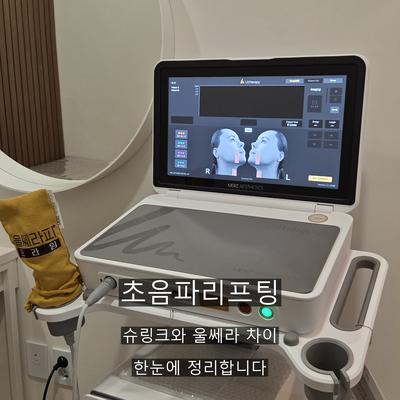
In the ultrasound lifting category, Shurink is utilized as a maintenance procedure that can be received with relative ease.
Ultherapy, based on precise targeting and extensive clinical data, can be considered suitable for more intensive lifting procedures.
Each device is designed with different energy delivery methods, tip specifications, and recommended treatment cycles.
Rather than concluding that one specific device is superior, it is important to choose based on the areas of skin sagging and the desired timing for improvement.
Therefore, it is best to understand that the two devices are not in competition with each other, but rather are complementary components used according to their respective roles.
Both devices utilize High-Intensity Focused Ultrasound (HIFU) technology.
This method focuses energy on the SMAS layer (fascia layer) beneath the skin surface, delivering thermal stimulation.
This thermal stimulation induces the contraction of collagen fibers, and through gradual regeneration, skin elasticity is expected to improve.
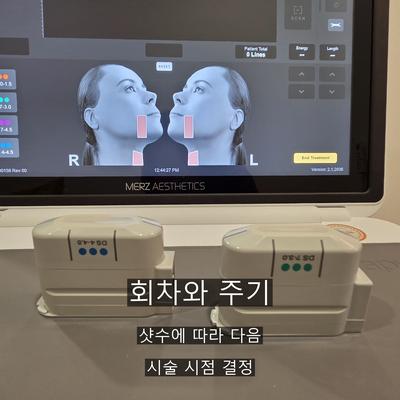
Both devices can adjust the treatment depth using various tip specifications such as 4.5mm, 3.0mm, 2.0mm, and 1.5mm.
Since the depth of ultrasound energy penetration varies according to the tip specification, the appropriate tip will be selected and used for each treatment area.
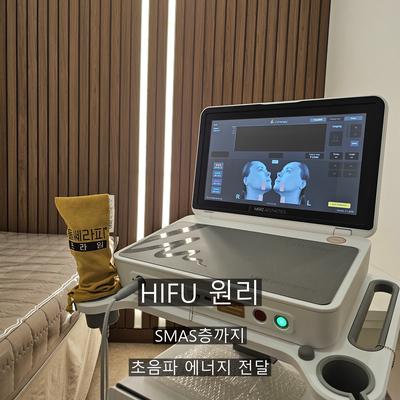
Ultherapy, through its tilting technology that allows for fine adjustment of the tip angle, enables real-time verification of the SMAS layer's position on an ultrasound screen during the procedure.
Shurink has the advantage of effectively treating large areas, making it suitable for periodic maintenance.
Therefore, neither device can be said to be superior; the choice depends on whether precise targeting is required or if improvement across a large area is desired.
If precise treatment of a specific point is required, Ultherapy may be more suitable, whereas Shurink may be more appropriate for uniform improvement across a large area.
If you are considering an ultrasound lifting procedure, it is advisable to understand these differences in device objectives beforehand and consult with a specialist.
Ultrasound Lifting: Choosing the Right Device for Your Treatment Goals is Key
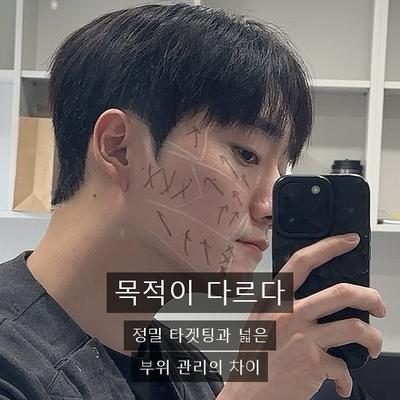
Ultrasound lifting is primarily recommended for improving sagging cheeks, jawline sagging, neck wrinkles, and overall decreased skin elasticity.
This procedure can be considered if laxity in the SMAS layer is observed, regardless of fat volume.
If there is insufficient volume, the skin's supportive structure may be weak, making sagging appear more prominent.
The treatment approach may vary depending on whether the sagging is widely distributed or concentrated on a specific line.
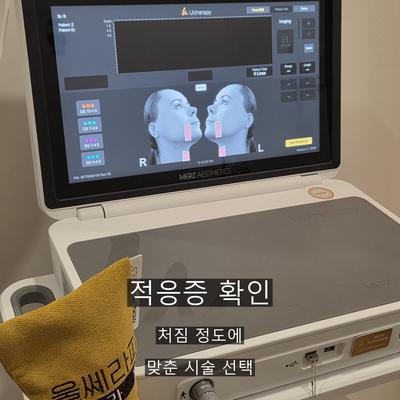
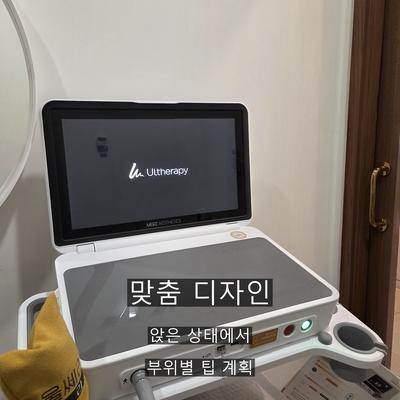
Before the procedure, the extent and lines of sagging, as well as the skin thickness in each area, are carefully examined while the patient is in a seated position.
Through this diagnostic process, a detailed treatment plan is established, determining which areas will receive 4.5mm, 3.0mm, or 2.0mm tips.
Once the treatment plan is confirmed, actual ultrasound delivery begins, and in the case of Ultherapy, it includes a step to reconfirm the position of the SMAS layer via an ultrasound screen.
During the procedure, tips are changed as needed, moving between different areas.
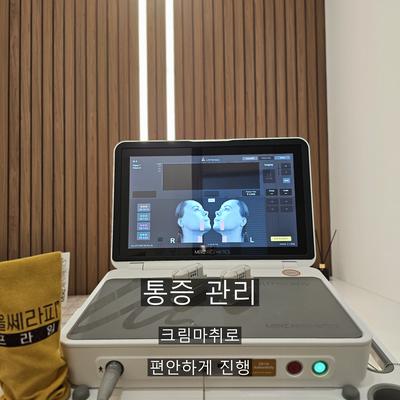
Since energy is delivered to the deep layers of the skin, a slight tingling or stimulating sensation may be felt during the procedure.
Topical anesthetic cream is usually applied before the procedure, and in some cases, individuals may proceed without anesthesia.
Swelling may occur immediately after the procedure, and while there are individual differences, changes can generally be felt gradually starting about one month later.
During the procedure, a cooling system operates concurrently to regulate the skin's surface temperature.
For Shurink, it is generally recommended to have multiple treatments at approximately one-month intervals for gradual maintenance, rather than a single session.
For full-face Ultherapy, more than 600 shots are recommended, and if a sufficient number of shots has been received, retreatment can be considered at intervals of 6 months to 1 year.
If you received fewer shots than recommended in a divided treatment, you can complete the full shot count with additional treatments at one-month intervals.
Even for lifting procedures, the operational methods differ between devices, so it's good to note that the timing of subsequent treatments may also vary.
Keeping a record of the number of shots received and the intensity per area can be useful for planning future treatments.
The design principles vary for each device.
Frequently Asked Questions
Q. Which should I receive first for ultrasound lifting, Shurink or Ultherapy?
A. The decision on the procedure can vary depending on the degree of skin sagging and the desired direction of improvement. During an ultrasound lifting consultation, the medical staff first meticulously checks the skin thickness and degree of sagging in each area. Afterwards, considering whether precise targeting or broad area management is needed, we recommend the appropriate equipment.
Q. How long does one ultrasound lifting session take?
A. The duration of an ultrasound lifting procedure varies depending on the customized design process according to your skin condition, the type of tips used, and the frequency of tip changes. If multiple areas are managed extensively, or if specific facial areas are treated more precisely, the time required may be longer.
Q. I heard that ultrasound lifting is very painful; do I have to have anesthesia?
A. General anesthesia is not mandatory. Typically, cream anesthesia is often applied before the procedure. However, for ultrasound lifting, having some sensation remaining in the treated area can help the medical staff confirm and adjust the precise treatment location, so some individuals proceed without anesthesia.
Q. I don't have much cheek fat; won't my cheeks become more hollow if I get ultrasound lifting?
A. The SMAS layer, where ultrasound lifting acts, is a tissue distinct from the fat layer that constitutes facial volume. Therefore, even those with less facial volume can consider ultrasound lifting to improve the skin's supportive structure. In such cases, a treatment plan that precisely targets only the SMAS layer without affecting the fat layer becomes even more crucial.
The Sincerity of Kkeut Clinic
At our clinic, we first design the treatment by checking the patient's skin condition in a seated position. We aim for delicate, customized treatments using tips of various depths, such as 4.5mm, 3.0mm, 2.0mm, and 1.5mm, depending on the skin thickness of each area.
During Ultherapy procedures, the medical staff confirms the precise location of the SMAS layer in real-time via an ultrasound screen. We utilize a tilting technique to ensure energy is delivered evenly and adhere to the principle of maintaining a standard tip length of 25mm to enhance the precision of the treatment.
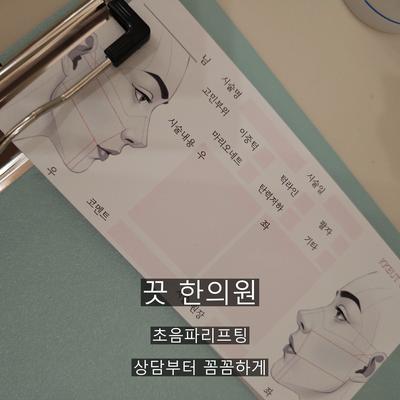
Once the procedure is complete, we meticulously record the type of tips used, the treated areas, and the number of shots on a lifting card, which is then shared with the patient. Through this process, we strive for transparency and diligent management of the treatment.
The meticulousness that makes a subtle difference can be experienced in our clinic's care.
Related notes
Procedure notes worth reading next.


Loading menu…