
[Meticulous Doctor] Tattoo Removal[When you want to remove semi-permanent tattoos] Eyebrow Tattoo Removal
![[When you want to remove semi-permanent tattoos] Eyebrow Tattoo Removal](/_next/image?url=https%3A%2F%2Ffirebasestorage.googleapis.com%2Fv0%2Fb%2Fkkeutguro-7e583.firebasestorage.app%2Fo%2Fproducts%252Fguro%252Fen%252F1758873276552_20dc2f6d-7026-4f97-b018-741967fb4465_ghfj.webp%3Falt%3Dmedia%26token%3D1551abf1-d5d2-4404-bfdb-2443e48498b6&w=2048&q=75)
[When you want to remove semi-permanent tattoos] Eyebrow Tattoo Removal
As time passes, semi-permanent eyebrow tattoos often discolor or change shape from the initial intent, leading many to consider removal. Our clinic aims to help improve these eyebrow tattoo marks with appropriate methods to restore a natural impression. *VAT not included
Options
Treatment Details
KKEUT Clinic — Eyebrow Tattoo Removal: What Sets Us Apart
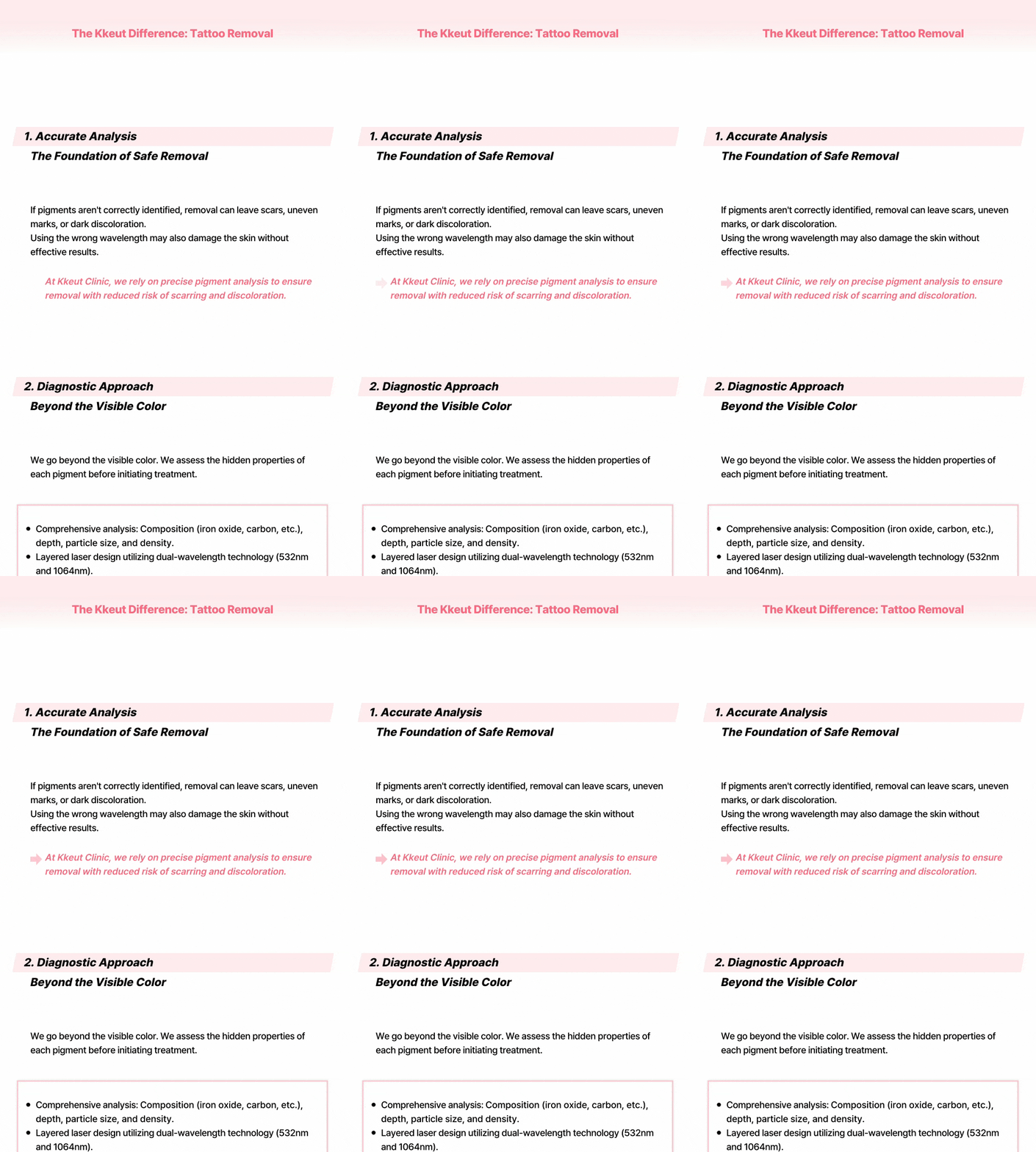
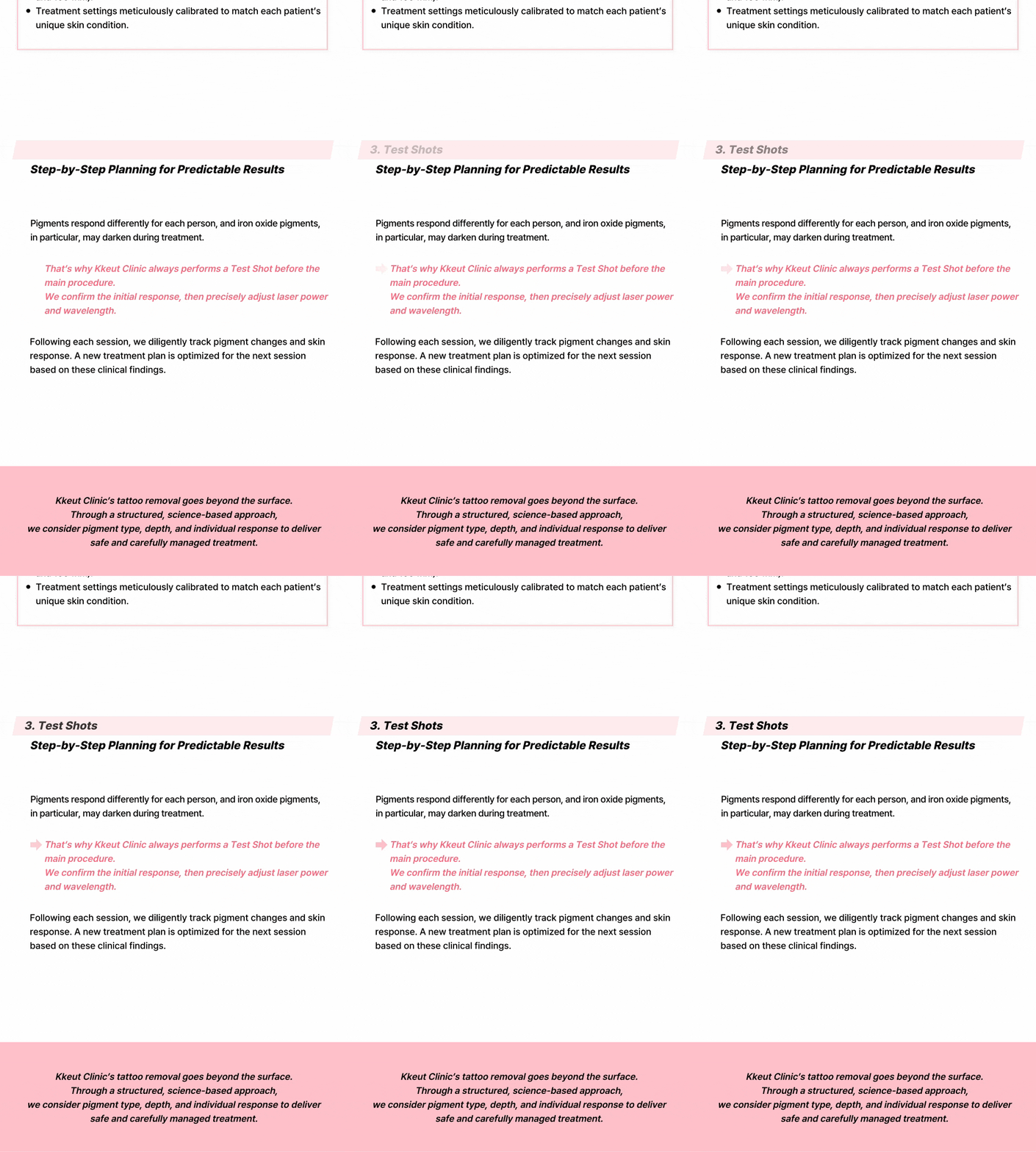
1) Pigment analysis–based diagnosis
We don’t fire based on color alone—we analyze composition, location, and concentration first.
2) Mandatory test shots
To prevent unwanted color shifts, we perform a test shot before treatment to check pigment response.
3) Session-by-session planning
We track your response after each visit and fine-tune the next plan accordingly.
4) Depth-matched, multi-layer treatment
We tailor wavelengths to pigment depth: multi-layer design by adjusting energy and wavelength to the actual pigment level.
Why Choose KKEUT Clinic for Eyebrow Tattoo Removal?
1) Custom diagnosis grounded in pigment analysis
Treating by “color alone” is risky. We analyze pigment type (iron oxide, carbon, mixed inks), its wavelength reactivity, location, and load.
Depth of deposition and particle size determine optimal wavelength and energy—clinical judgment here is critical.
2) Test-shot protocol to prevent darkening
Iron-oxide pigments can paradoxically darken after laser. We require test shots for all patients to set safe energy/wavelength. If darkening risk appears, we escalate gradually and safely.
3) Tracked progress, customized each round
This isn’t a “fixed number of sessions.” After every treatment we review pigment response and adjust wavelength, energy, and interval (e.g., change plan if any darkening occurs).
4) Precision, depth-specific approach
Although brow pigment is often in the upper dermis, depth/distribution vary. We modulate treatment: 532 nm for superficial/bright tones; 1064 nm for deeper/brown–black pigment—not one static setting for all.
How Eyebrow Tattoo Removal Works
Removal follows Selective Photothermolysis:
light energy is preferentially absorbed by pigment particles → converted to heat → particles expand/shatter, while surrounding tissue is spared.
- Wavelength matters: 1064 nm penetrates deeper dermis and targets black/brown; 532 nm stays more superficial and targets red/orange and lighter pigments.
- Ultrashort pulses (≤ nanoseconds) concentrate energy into pigment before heat diffuses, fragmenting particles finely.
- Clearance: fragments are phagocytosed by macrophages and cleared via the lymphatics—initial lymph response in ~3 days–2 weeks, with ongoing reduction over weeks to months.
The shorter the pulse, the finer and more uniform the fragments—improving both efficacy and safety.
Treatment Steps
STEP 1. Customized pigment assessment
Type, depth, load, and oxidation risk.
STEP 2. Topical anesthetic
Applied generously to minimize discomfort.
STEP 3. Test shot + laser treatment
Test for reactivity, then treat with 1064/532 nm as indicated; adjust fluence during the session based on response.
STEP 4. Cooling & calming care
Manage frosting/erythema with healing ointment + Jaungo calming.
STEP 5. Response log & plan
Record outcomes and set the next-session strategy.
Pain & Aftercare
- With numbing, most patients feel only tolerable pricking/zinging.
- Frosting and transient redness usually subside within hours.
- Scabs or mild redness can occur and generally settle within 2–3 days.
Session Interval
- Every 4–6 weeks (allow ≥4 weeks for skin recovery and pigment clearance).
- Typically 3–5+ sessions, depending on pigment load and skin type.
- Intervals that are too short increase risks (skin injury, color shift) and reduce clearance efficiency.
Good Candidates
- Time-altered semi-permanent brows (greyed, reddish, bluish tones)
- Asymmetrical or outdated designs you’d like removed
- Need pigment cleared before redoing brows
- Want a more natural look restored
- Previously treated elsewhere but unsatisfied with results
A Note from Our Medical Director
Eyebrow tattoo removal is not “just shooting a laser.”
Depth, location, particle size, composition, and risk of oxidation must all guide the plan.
Especially with iron-oxide inks, precise diagnosis and settings—informed by experience—matter more than the device itself.
Choose a clinic that analyzes pigment in advance and tests reactivity before proceeding.
In removal, results are made by people, not machines—through data, judgment, and careful adjustments.
We examine every brow thoroughly and personally manage every step—from diagnosis to recovery—to deliver predictable, safe outcomes.
Post-Treatment Instructions
- No cleansing of the area for at least 6 hours (avoid irritation).
- Sun protection is a must (sunscreen + hat/sunglasses).
- Let scabs fall off naturally—do not pick.
- Apply healing cream consistently.
- Avoid saunas/steam rooms/strenuous exercise for 1 week.
- Avoid brow makeup (pencils, tattoo pens, etc.) for at least 1 week.
Procedure Process Guide
첫 상담부터 마무리까지의 실제 진행 순서를 확인하세요.
- 01
We carefully check your individual skin condition and tattoo characteristics, then proceed with a customized consultation.
- 02
An anesthetic cream is applied to minimize discomfort during the procedure.
- 03
The laser intensity is adjusted and applied according to the individual's eyebrow tattoo condition.
- 04
The procedure concludes with post-treatment care (Mummy Mask) to soothe the skin and promote rapid recovery.
시술 기본정보
시술 시간, 마취, 회복, 유지기간을 한 번에 확인하세요.
TIME
Within 30 minutes
ANESTHESIA
Anesthetic cream 15-30 minutes
RECOVERY
Immediate return to daily life
Ideal For
One Fine Difference makes real results.
- KKEUT POINT 01
When you want to correct eyebrow tattoos that have discolored over time, appearing unsightly in shades of gray, red, or blue, unlike their original color.
- KKEUT POINT 02
Those who are considering removal or correction due to an existing eyebrow tattoo design that doesn't suit their face shape well, or issues with asymmetry between the eyebrows.
Q&A
고객님들이 가장 많이 물어보시는 내용을 모았습니다.
When can I consider eyebrow tattoo removal treatment?

It is recommended to consult for the treatment at least 4 to 6 weeks after getting the semi-permanent tattoo.
How many removal sessions are usually needed?
The number of sessions required varies for each individual, depending on the type of pigment, skin depth, and your skin's reaction. Often, repeat treatments are performed at intervals of 4 to 6 weeks.
Do I need to prepare a separate ointment to apply after the treatment?
After tattoo removal, your skin may become sensitive. Our clinic provides the necessary ointment for skin soothing and rapid recovery, so you don't need to worry about preparing it yourself.
Cautions
Results = Treatment × Aftercare. Please follow the notes below.
It is recommended to avoid using exfoliating products or physical scrubs on the treated area for about a week. This is to reduce skin irritation and aid in recovery.
If scabs form on the treated area, it is important not to forcefully remove them. Allow them to fall off naturally to prevent skin damage and ensure smooth recovery.
For about one day immediately after the procedure, you should be especially careful to prevent water from directly touching the treated area.
Please take care not to rub the treated area or apply any other unnecessary stimulation.
To ensure proper skin healing, it is recommended to refrain from alcohol, smoking, saunas, and strenuous exercise for about a week after the procedure.
Loading menu…