
Brightening / Melasma / Redness / Blemishes[Considering individual skin characteristics] Laser Toning
![[Considering individual skin characteristics] Laser Toning](/_next/image?url=https%3A%2F%2Ffirebasestorage.googleapis.com%2Fv0%2Fb%2Fkkeutguro-7e583.firebasestorage.app%2Fo%2Fproducts%252Fguro%252Fen%252F1758772754436_6a736bf3-5320-4290-9e11-206920de8ee9___-001-ezgif.com-png-to-webp-converter.webp%3Falt%3Dmedia%26token%3D6117b6e0-455a-48ba-b800-0139c919c871&w=2048&q=75)
[Considering individual skin characteristics] Laser Toning
Laser toning is one of the treatments that can be performed with relatively less burden of pain and recovery time. LaserOptek's equipment, utilizing a 1064nm wavelength, delivers energy to pigments, which can help manage various pigmented lesions such as melasma, lentigines, freckles, ABNOM, and dark circles. It delicately targets pigments deep within the skin to promote improvement in pigmentation. The treatment is customized to the individual's skin condition and pigment type. *Post-treatment care separate *VAT separate
Options
Treatment Details
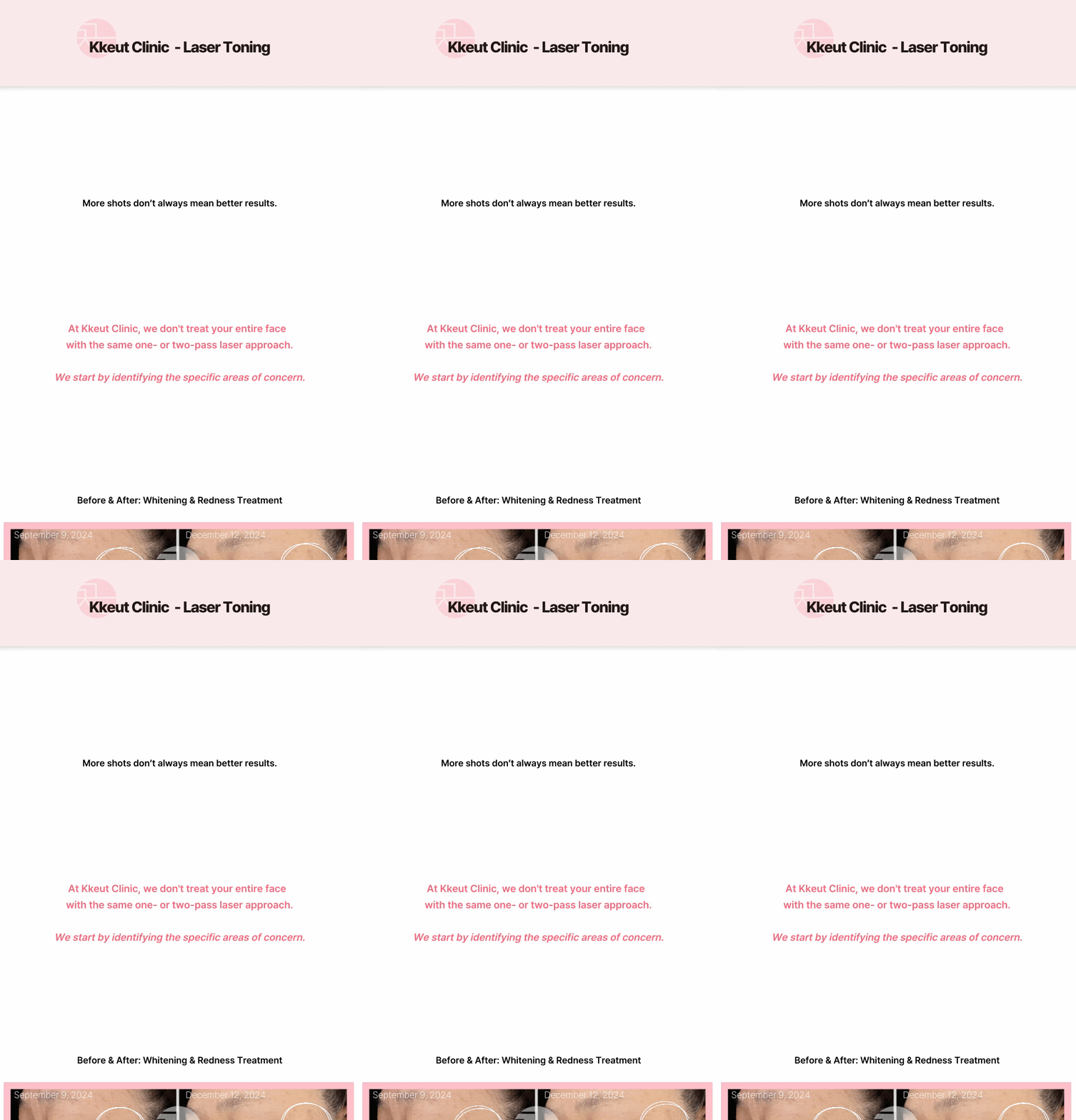
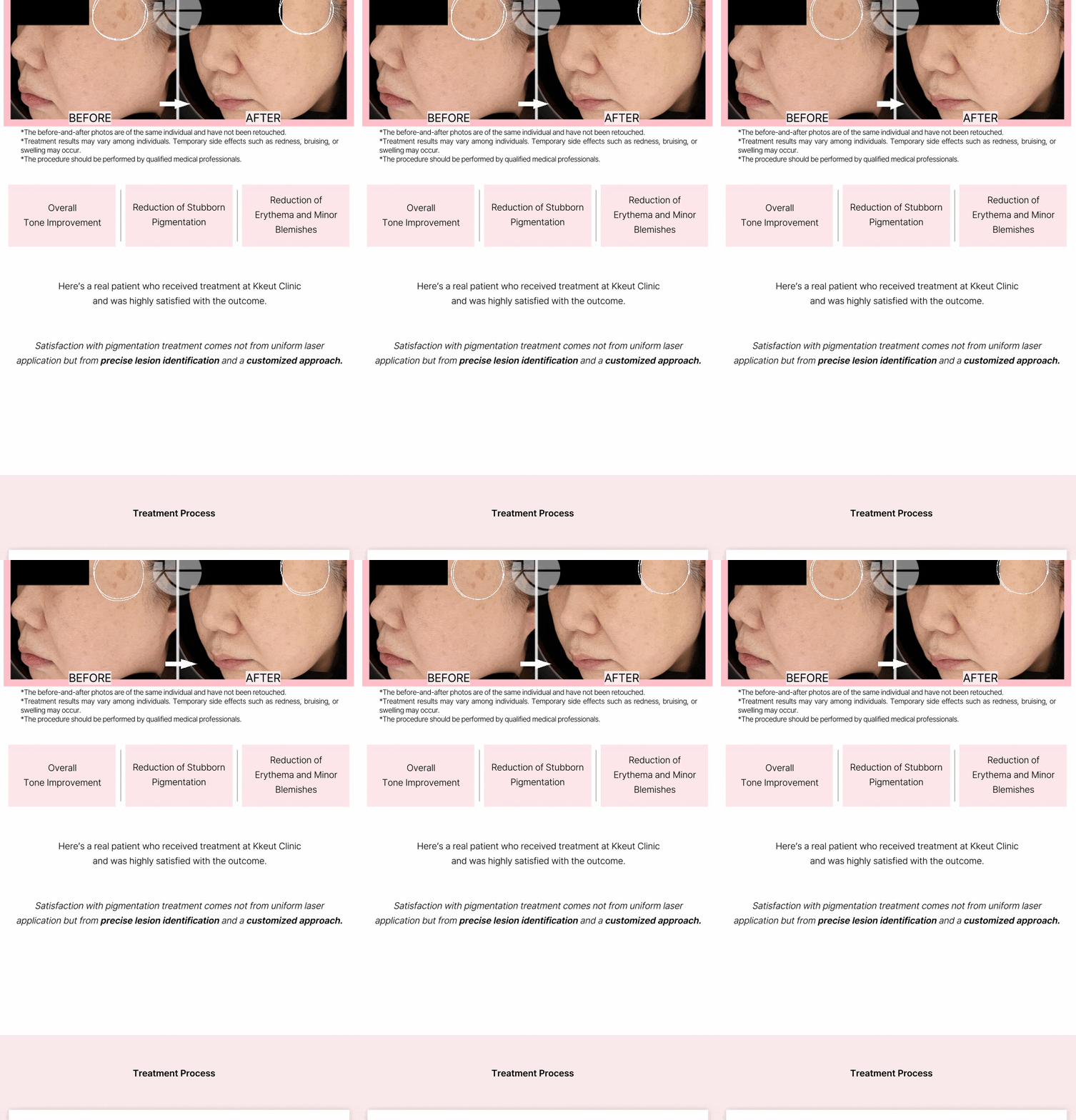
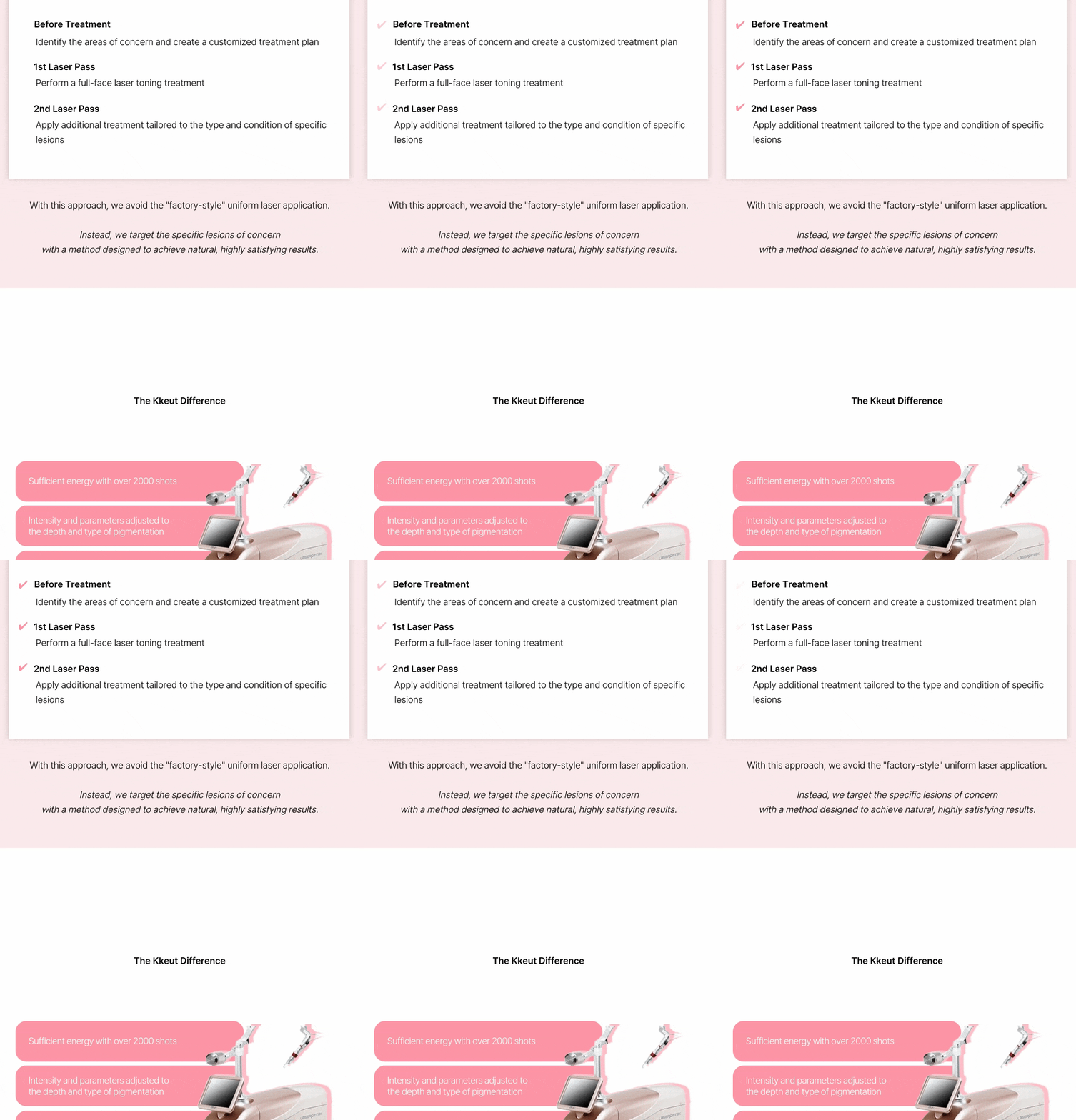
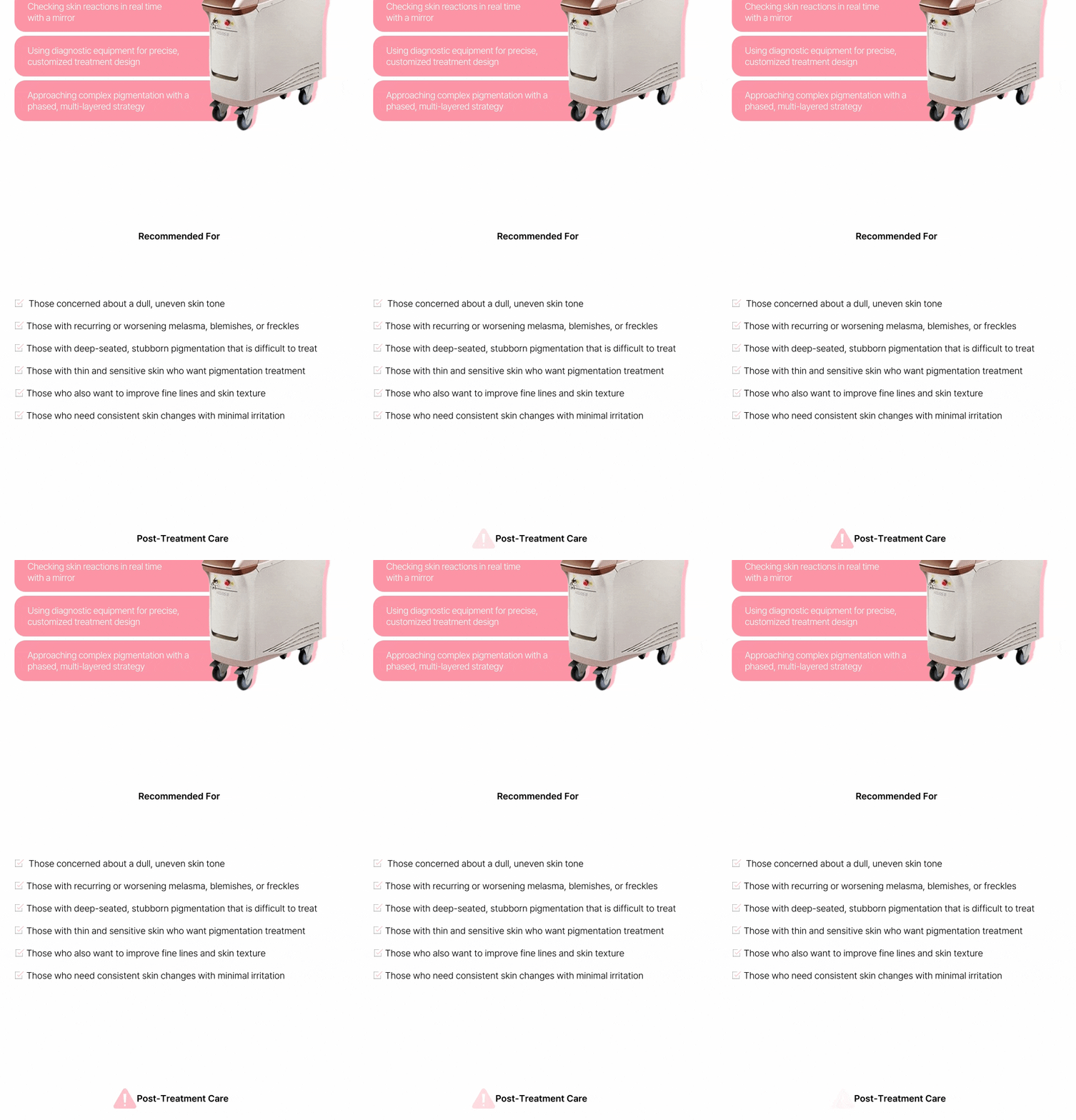

KKEUT Clinic Laser Toning — What Makes Us Different
- We guarantee sufficient energy (2,000+ shots).
- We don’t rush with low power and low shot counts. At KKEUT Clinic, we deliver 2,000+ precisely controlled shots to maximize results while minimizing irritation.
- Doctor-tailored power by pigment depth & type.
- Melasma, ABNOM (acquired bilateral nevus of Ota-like macules; also called Hori’s nevus), and sunspots each sit at different depths and behave differently. We treat melasma more gently, ABNOM more assertively, and adjust parameters by area for mixed cases.
- Real-time mirror checks & on-the-spot parameter tuning.
- Treatment doesn’t end once the laser fires. Your doctor checks your skin in a mirror during the session and adjusts spot size, energy, and even handpiece as needed—so it’s true one-to-one customized care, not “toning in name only.”
- Mark-Vu imaging for precise mapping.
- No guesswork. We use the Mark-Vu skin analyzer to identify pigment type, distribution, and depth, and then build your plan from objective data.
- Layered strategy for complex pigment.
- When melasma and ABNOM coexist, treating only one layer strongly can worsen the other. We calm melasma first, then target deeper dermal ABNOM—a staged approach that’s both safer and more effective.
Why KKEUT Clinic’s Laser Toning Stands Out
Laser toning is widely used for pigment, but device choice, shot count, and energy settings determine your outcome. Because melasma, sunspots, and ABNOM differ in depth and tissue response, you need a plan that’s precisely engineered.
1) We ensure at least 2,000 shots
Many studies report that 1,500–2,500 shots with low-fluence toning are safe and effective. We guarantee 2,000+ shots by default—designed to deliver meaningful results without overstressing the skin.
Skin doesn’t change just because a machine is turned on: we tailor shot count, fluence, repetition rate, and spot size to pigment depth, spread, and sensitivity.
2) Doctor-customized toning by condition
(1) Melasma
Melasma spreads across both cheeks and is easily aggravated by irritation due to overactive melanocytes. We start with a short-pulse (≈5 ns) Q-switched approach, aiming to disrupt melanosomes (pigment packets) without stimulating melanocytes themselves.
Throughout the session, the doctor checks your skin in the mirror and fine-tunes energy and focus areas, switching handpieces or parameters so no area is missed—before, during, and after each pass.
(2) ABNOM (Hori’s nevus)
Though also in the dermis, ABNOM requires stronger settings than melasma. In mixed cases, we treat melasma gently first and ABNOM more strongly—opposite strategies at the same visit demand higher technical skill. Without this order, melasma can flare.
Post-Mark-Vu evaluation, we tailor spot size, passes, and fluence to your skin type to treat ABNOM while minimizing side effects.
(3) Other pigment (lentigines, freckles, sunspots)
These often respond quickly when the wavelength matches the target—but become tricky alongside melasma/ABNOM. We still use mirror checks, power adjustments, and handpiece changes every session. In practice, our “toning” functions as a doctor-led, targeted melanin therapy, not a one-setting procedure.
Pico Toning vs. Laser Toning
Pico toning uses picosecond pulses (very short) to shatter pigment more finely in theory.
Laser toning (Q-switched) uses nanosecond pulses (slightly longer) to deliver energy safely and steadily.
Both selectively break down melanin to brighten skin and treat melasma, sunspots, and ABNOM. Pico may respond a bit faster in the first 2–3 sessions, but across ~10 or more treatments, studies show similar whitening/brightening outcomes at 1064 nm.
- Laser toning has nearly two decades of safety data and can be more stable for sensitive skin and melasma-prone patients.
- Pico toning can deliver higher peak energy briefly, which may cause temporary redness or stinging in some cases.
Bottom line for equivalent results with laser toning:
- Consistency: plan for 10+ sessions (cumulative effect matters).
- Right fluence: typically ~1.0–2.0 J/cm², adjusted to your response.
- Sufficient shots: 2,000+ shots per session.
- Proper intervals: every 1–2 weeks to build momentum.
- True customization: choose a provider who adjusts in real time to your skin.
When these conditions are met, aggregated data show no meaningful difference from pico in overall brightening.
(Reference journals cited in your copy: Medicina (Kaunas) 2022; Lasers in Medical Science 2021; Journal of Cosmetic and Laser Therapy 2021.)
What Is Laser Toning?
Laser toning delivers low-fluence energy repeatedly into the skin to gradually fragment pigment and even out tone—unlike high-power “spot-burning,” it builds gentle, cumulative change while encouraging skin renewal.
With a Q-switched Nd:YAG laser at 1064 nm, we can reach the upper dermis where melanin clusters reside while protecting the surface barrier, making it suitable even for thin or sensitive skin.
How it works
- Low energy, high repetition: thousands of passes chip away at melanin so your immune system can clear it naturally.
- Dendrite (melanosome-transfer) disruption: short pulses interrupt melanocyte dendrites, reducing melanin transfer to the surface—helping prevent re-darkening.
- Direct melanin fragmentation: the laser also breaks pigment within melanocytes, clearing existing discoloration.
- These mechanisms require very short pulse durations (nano- to picosecond), as used in laser or pico toning.
Three Core Therapeutic Actions
- Removes existing pigment particles.
- For non-melasma pigment (e.g., lentigines/ABNOM), we use stronger parameters to clear melanin—while carefully moderating settings for melasma to avoid flares.
- Blocks pigment transfer.
- By disrupting melanocyte dendrites, melanosomes are less able to reach the epidermis, helping reduce future pigmentation.
- Breaks down intracellular melanin.
- The laser fragments melanin within melanocytes, lowering overall pigment load and promoting a brighter, more even tone.
Treatment Benefits
- Brighter, clearer tone
- Gradual breakdown of melanin lifts dullness for a naturally radiant look.
- Melasma & hyperpigmentation relief
- We target melanosomes while avoiding unnecessary stimulation of melanocytes—safer for sensitive melasma.
- ABNOM (Hori’s nevus) improvement
- Customized energy reaches deeper dermal pigment more safely.
- Lower relapse risk
- By disrupting melanin transfer pathways, we reduce re-pigmentation tendencies.
- Smoother texture & fine lines
- Laser stimulation supports skin renewal, improving texture and softening fine lines as a secondary benefit.
- Maximum results with minimal irritation
- Low-fluence, high-repetition delivery is gentle enough for sensitive skin yet effective.
Who Is a Good Candidate?
- Concerned about dull, uneven skin tone
- Struggling with melasma, sunspots, or freckles that darken over time
- Have dermal pigment such as ABNOM (Hori’s nevus)
- Thin, sensitive skin but still want pigment treatment
- Want texture refinement alongside brightening
- Prefer a gentle, cumulative approach with steady improvement
Treatment Steps
STEP 1. Mark-Vu skin imaging to map pigment depth and extent
STEP 2. Doctor consultation and personalized plan
STEP 3. Parameter setup & laser toning (pre-pass mirror check with the doctor)
STEP 4. In-procedure mirror check and focus adjustments
STEP 5. Post-treatment mirror check and aftercare guidance
A Word from Our Medical Director
“Whether melasma or ABNOM, many patients have struggled with pigment for years—and worry that treatment might make it worse. We never ‘just run the machine.’ We watch the skin closely, treat only as much as needed, and adjust precisely. Because pigment differs by depth and sensitivity, a tailored approach is essential. Our laser toning is set up as a system to deliver real results, not a checkbox procedure. We’ll work hard so you can truly see improvement.”
Aftercare
- Cleansing & makeup are allowed the same day. Please be diligent with broad-spectrum sunscreen.
- Focus on soothing and hydration for temporarily sensitized skin.
- Mild swelling or redness can occur and usually settles on its own. If it lasts more than a few days, please visit us for a check-in.
Procedure Process Guide
첫 상담부터 마무리까지의 실제 진행 순서를 확인하세요.
- 01
Personal cleansing
- 02
마크뷰(Mark-Vu) 장비를 활용한 피부 정밀 분석
- 03
의료진과의 1:1 개인별 맞춤 상담
- 04
개개인에 적합한 시술 파라미터 설정 및 레이저 토닝 진행
- 05
피부 진정 및 보호를 위한 재생 크림 도포
시술 기본정보
시술 시간, 마취, 회복, 유지기간을 한 번에 확인하세요.
TIME
Within 20-30 minutes
ANESTHESIA
No anesthesia
RECOVERY
Immediate return to daily life
Q&A
고객님들이 가장 많이 물어보시는 내용을 모았습니다.
What are the recommended intervals and number of sessions for toning treatment?

Laser toning treatments are usually performed at intervals of 1 to 2 weeks. Better skin improvement can generally be expected with consistent management for approximately 10 sessions or more. It is best to determine the exact treatment interval and number of sessions through consultation with a specialist.
Can acne appear after toning treatment?
Yes, it is possible for some skin types to temporarily experience acne after laser toning treatment. This phenomenon is mainly observed in individuals with active sebum secretion. Such reactions usually subside naturally over time, so there is no need for significant concern. It is advisable to manage the treated area to avoid irritation and provide ample moisture. If discomfort persists after one week, it is recommended to visit the clinic to have your skin condition checked by medical staff.
Is Pico Toning truly more effective than Nano Toning?
Pico toning is characterized by a shorter laser pulse duration compared to nano toning. However, clinically observed overall pigmentation improvement effects often do not show a significant difference between the two methods. It is best to carefully examine individual skin conditions and consult with medical staff to determine which treatment is more suitable.
Loading menu…